Does Sleep Training Work?
Sleep training works for approximately 70-80% of families in the short term, though success depends heavily on your chosen method and goals. While extinction techniques can reduce crying within 3-7 nights, responsive approaches focus on attachment and sustainable habits, typically showing significant improvements in settling and night wakings within 2-4 weeks.
Please note: This article provides general information and does not constitute medical advice. If you have concerns about your child's health, growth, or development, please consult your GP or health visitor.
What does "working" actually mean for your family?
When parents ask "does sleep training work?", they are usually asking if their child will eventually sleep through the night without needing parental intervention. However, in the world of child development, "working" can have multiple definitions. For some, it means the cessation of crying; for others, it means a child who feels safe enough to fall asleep with minimal support. At Nourished Nights, we believe a method only "works" if it preserves the parent-child bond and respects the baby's emotional needs.
Traditional behavioural sleep training, often referred to as extinction or "cry-it-out," aims to reduce a specific behaviour (crying or calling out) by removing the reinforcement (the parent's presence or comfort). While research suggests these methods can lead to quicker results in terms of total sleep duration, they often come at a significant emotional cost to the parents. Conversely, gentle sleep support focuses on the underlying reasons for wakefulness, such as schedule tweaks, environment, and sensory needs, leading to long-term stability rather than a quick, potentially fragile fix.
Is sleep training the same as "crying it out"?
One of the biggest misconceptions in the UK parenting community is that all sleep training involves leaving a baby to cry. This is simply not the case. Sleep training is an umbrella term for any process that helps a child learn to fall asleep or return to sleep. There is a vast spectrum of approaches available to exhausted families.
- Extinction (Cry-it-out): The baby is placed in the cot and the parent does not return until morning.
- Graduated Extinction (Ferber/Check-and-pause): The parent returns at set intervals to provide brief comfort but does not pick the baby up.
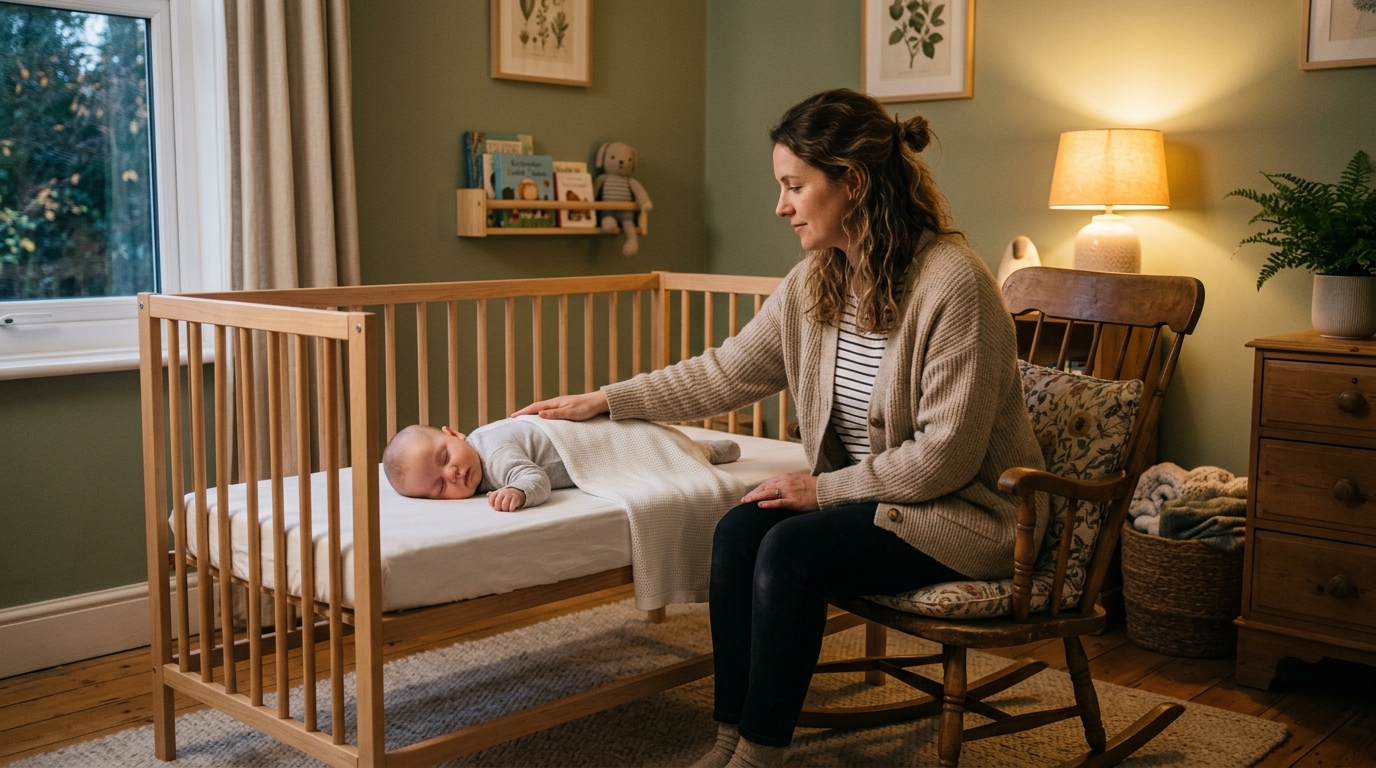
- Responsive/Gentle Methods: The parent remains with the child, offering physical and verbal reassurance, gradually reducing support as the child becomes more confident.
Many families prefer to avoid extinction methods because they feel counter-intuitive to their parenting style. A responsive sleep consultant will never ask you to ignore your baby's distress. Instead, they look at the "whole picture", from the timing of the last nap to the environment in the nursery, to make falling asleep a peaceful transition rather than a battle of wills.
| Method Category | Parental Response | Primary Goal | Typical Timeframe |
|---|---|---|---|
| Behavioural Extinction | Minimal to none | Rapid cessation of calling out | 3-7 Nights |
| Graduated Response | Timed intervals | Increased independent settling | 1-2 Weeks |
| Responsive Support | Immediate and physical | Secure attachment and gradual independence | 2-4 Weeks |
Does sleep training work for every baby's temperament?
Every baby is a unique individual with a distinct temperament. This is a crucial factor in why some methods seem to work wonders for one family while failing miserably for another. A "spirited" or highly sensitive baby may react to timed checks with increased cortisol and escalated distress, making traditional sleep training ineffective and traumatic for the household.
For these sensitive souls, a no cry-it-out sleep support approach is often the only way to see progress. These babies need to know that their "safe person" is available before they can relax their nervous system enough to drift off. If a baby's temperament is naturally more cautious, they require more co-regulation before they can achieve self-regulation. Understanding your child's specific needs is the first step in Nourished Nights' approach, ensuring that any changes we make are sustainable for your specific child.
The science: What happens during sleep training?
To understand if sleep training works, we must look at the biology of sleep. Sleep is not a skill like riding a bike; it is a biological state that we can either facilitate or hinder. Two main drivers control sleep: Sleep Pressure (Homeostatic Drive) and the Circadian Rhythm (the body clock). If these two are not aligned, no amount of sleep training will be successful.
When a baby is "undertired" (not enough sleep pressure) or "overtired" (stressed, leading to a spike in cortisol and adrenaline), they will struggle to settle. Often, what parents perceive as a need for "training" is actually a need for a schedule adjustment. By aligning the child's naps with their natural biological dips in energy, we make the process of falling asleep much easier. Furthermore, we must ensure the environment aligns with The Lullaby Trust safer sleep guidance, ensuring the room is between 16-20°C and the cot is clear of pillows or soft toys, which promotes both safety and better rest.
How long does it take for sleep training to work?
The timeframe for seeing results depends entirely on the consistency of the parents and the gentleness of the method. While harsh methods might see a change in 72 hours, those changes can often "regress" during illness, teething, or travel because the child hasn't learned to feel safe in the process; they have simply learned that crying doesn't result in help.
Gentle methods take longer, usually between two and four weeks, but the results tend to be more resilient. This is because we are building a foundation of trust. When you use a service like the Calm Nights Reset, the focus is on gradual shifts. We might start by changing how the baby is held, then move to sitting by the cot, then moving to the door. This "scaffolding" allows the child to master one small step at a time without their nervous system being overwhelmed.
| Age Group | Common Sleep Challenge | Gentle Strategy |
|---|---|---|
| 4-6 Months | Sleep regression / Catnapping | Optimising wake windows and darkness |
| 7-12 Months | Separation anxiety / Standing in cot | Consistent verbal reassurance and "the chair method" |
| 1-2 Years | Nap transitions / Boundary testing | Clear routines and visual cues |
| 3 Years+ | Bedtime resistance / Fears | Reward charts and evening connection time |
Why traditional sleep training might feel wrong for you
Many parents feel a deep sense of guilt or "gut instinct" telling them that leaving their baby to cry isn't the right path for them. It is important to validate these feelings. Modern neuroscience suggests that responsive parenting, responding to a baby's cues promptly, helps develop a healthy prefrontal cortex and a robust stress-response system. If the thought of "controlled crying" makes your heart race or brings you to tears, it is a sign that that specific method is not a fit for your family's values.
Choosing a responsive path doesn't mean you are destined for years of sleep deprivation. It simply means you are choosing a path of co-regulation. You can still set boundaries and encourage better sleep habits while being physically present. At Nourished Nights, we empower parents to trust their instincts while providing the evidence-based structure needed to improve the whole family's rest.
When should you speak to a professional?
If you have tried adjusting the schedule, perfected the environment, and remained consistent with a gentle method for several weeks without success, it may be time to seek expert help. Sometimes, underlying issues like silent reflux, allergies (such as CMPA), or obstructive sleep apnoea can interfere with a child's ability to sleep, regardless of how "trained" they are.
A Level 6 accredited practitioner can help you untangle the web of sleep. Whether it's a quick Sleep Clarity Call to troubleshoot a specific issue or a more intensive four-week Restful Family Transformation, professional support provides the objective eye and the emotional encouragement that tired parents need. Remember, if your child seems in pain, is snoring, or is failing to gain weight, your first port of call should always be your GP or health visitor to rule out medical causes.
FAQ
Question? Does sleep training cause long-term psychological harm? Answer: There is no definitive evidence that sleep training causes long-term harm, but many researchers argue that responsive methods are better for maintaining a secure attachment. Choosing a gentle, no-cry-it-out approach ensures that the child always feels supported and safe.
Question? Can I sleep train if I am breastfeeding? Answer: Absolutely. You do not need to stop breastfeeding or even night-feeding to improve your child's sleep habits. Gentle sleep support focuses on how the baby falls asleep at the start of the night, which often naturally reduces unnecessary night wakings.
Question? What is the best age to start gentle sleep support? Answer: While you can implement healthy sleep hygiene from birth, formal gentle sleep support is usually most effective from around 4 to 6 months of age. At this stage, babies begin to develop more predictable circadian rhythms and can consolidate sleep more easily.
Question? Will my baby stop crying entirely during gentle sleep training? Answer: It is unlikely that there will be zero crying, as crying is a baby's way of communicating frustration with a change in routine. However, with responsive methods, you are always there to comfort them, so they are never crying alone or feeling abandoned.
Question? Do I have to use a dummy to help my baby sleep? Answer: No, a dummy is not a requirement for sleep training success. If your baby uses one and it causes frequent "dummy runs" at night, we can work on teaching them to replace it themselves or gently weaning them off it, depending on your preference.
If you are feeling overwhelmed and exhausted, remember that you don't have to choose between your sanity and your child's emotional well-being. You can achieve restful nights through connection, not detachment. To start your journey toward better sleep, download our free sleep guide or book a free 20-minute discovery call with Nourished Nights today.