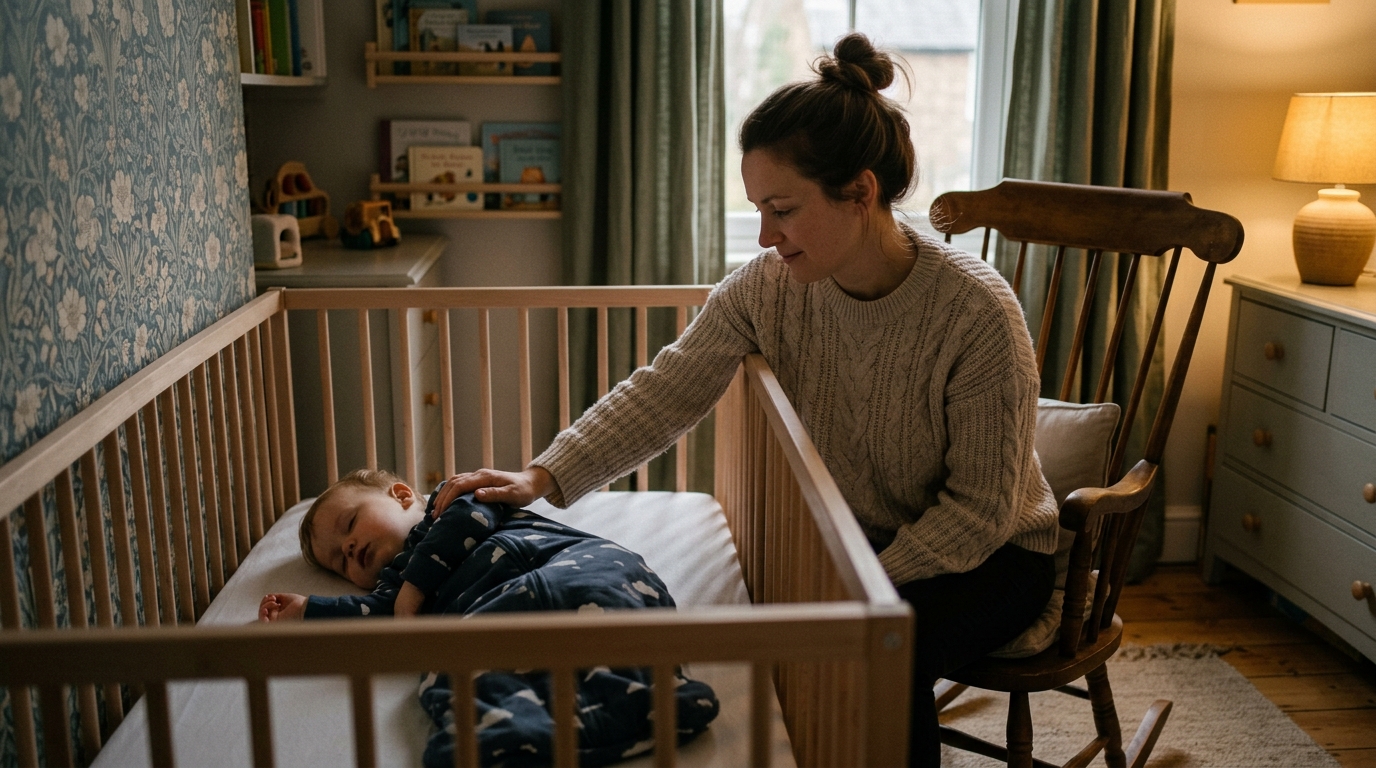
Navigating the 12 Month Sleep Regression: A Gentle, Responsive Guide
The 12 month sleep regression is a temporary period of disrupted sleep typically lasting 2 to 6 weeks, triggered by significant milestones like walking and language development. Unlike earlier regressions, this stage often involves nap resistance and separation anxiety, requiring a responsive, gentle approach to help your toddler settle back into a predictable routine.
Reaching the first birthday is a momentous occasion, but for many parents, the celebration is accompanied by a sudden and baffling change in sleep patterns. If your previously settled baby is now standing in their cot, refusing naps, or waking frequently throughout the night, you are likely facing the 12 month sleep regression. This phase can feel particularly draining because, after a year of parenting, exhaustion has a way of accumulating. At Nourished Nights, we understand that you want to support your child through these changes without resorting to harsh methods like cry-it-out or extinction. Our approach is always rooted in attachment and the latest sleep science, ensuring you can navigate this transition with compassion.
What exactly is the 12 month sleep regression?
A sleep regression is essentially a 'progression' in disguise. It occurs when a child’s brain is so busy mastering new skills that sleep takes a backseat. At twelve months, your child is undergoing a massive neurological and physical shift. They are moving from infancy into toddlerhood, a transition that involves a surge in cognitive awareness and motor skills. This regression is unique because it often manifests as a strike against daytime sleep rather than just night wakings. You may find your toddler suddenly seems 'over' their two-nap schedule, leading many parents to believe it is time to transition to a single nap, often prematurely.
It is important to remember that this phase is temporary. While it feels like the new normal when you are up at 3 am, the 12 month sleep regression usually resolves once the new skills (like walking or first words) become integrated into their daily life. During this time, maintaining a consistent, warm response is key to preventing long-term sleep associations that you might not want to sustain later, while still providing the comfort your toddler clearly needs.
Why is my 12-month-old suddenly waking at night?
Several factors converge around the first birthday to disrupt sleep. Understanding the 'why' can often help parents find the patience needed to get through the tougher nights. The primary drivers include:
- Gross Motor Milestones: Many babies start walking, cruising, or standing independently around twelve months. The brain often 'rehearses' these movements during light sleep phases, leading to a baby who suddenly stands up in their cot and cannot figure out how to sit back down.
- Language Development: The 'word explosion' often begins now. Even if they aren't speaking clearly yet, their internal processing is working overtime.
- Separation Anxiety: There is a known peak in separation anxiety around 10-14 months. Your toddler is becoming more aware of their independence, which paradoxically makes them feel more vulnerable when you leave the room.
- Teething: The arrival of first molars often coincides with this age, which can be significantly more uncomfortable than earlier teeth.
| Feature | 8-Month Regression | 12-Month Regression |
|---|---|---|
| Primary Trigger | Crawling and sitting up | Walking and first words |
| Nap Impact | Shorter naps | Nap refusal (especially the afternoon nap) |
| Night Wakings | Frequent, often related to hunger/comfort | Can include long periods of being awake ('split nights') |
| Primary Emotion | Frustration with movement | Heightened separation anxiety |
The Nap Trap: Should you move to one nap yet?
One of the most common mistakes during the 12 month sleep regression is dropping the second nap too early. Because toddlers at this age often fight their afternoon nap or take a very long time to settle, parents assume they are ready for a one-nap schedule. However, most toddlers are not biologically ready for a single nap until 14 to 18 months. Dropping a nap now often leads to overtiredness by bedtime, which ironically causes more night wakings and early starts.
If you find yourself struggling with daytime rest, it may be helpful to consult a gentle guide to baby naps by age to see where your child fits in the typical range. Before committing to a one-nap schedule, try shortening the morning nap to 'protect' the afternoon nap, or offer a slightly later bedtime on days when the second nap is refused. At Nourished Nights, we often help parents tweak their routines during our Sleep Clarity Calls to find the 'sweet spot' that avoids the overtiredness cycle.
Managing separation anxiety at twelve months
At this age, your toddler is beginning to understand that you exist even when you are not in the room, but they don't yet have a firm grasp of time. When you close the nursery door, they don't know if you’re gone for five minutes or five hours. This can lead to intense protests at bedtime. This is a normal developmental stage, but it requires a very responsive approach. If your child is distressed, they are not 'manipulating' you; they are seeking the safety of their primary attachment figure.
To support them, focus on building 'connection capital' throughout the day. Spend dedicated, screen-free time playing together. At bedtime, you might find that staying in the room for a few extra minutes or using a 'gradual retreat' method helps them feel secure enough to drift off. For more on this, you might find our article on supporting toddler bedtime anxiety useful. Remember, responding to your child’s cries builds trust and actually fosters independence in the long run.
How long does the 12 month sleep regression last?
While every child is different, the acute phase of the 12 month sleep regression typically lasts between two and six weeks. If the disruptions continue beyond this timeframe, it may be that some new sleep habits have formed that are no longer serving the family, or there may be an underlying schedule issue. It is also worth considering if your child is still genuinely hungry at night; while many toddlers are capable of sleeping through, others still require a night feed for comfort or nutrition. You can read more about when babies can sleep through without feeding to help manage your expectations.
Gentle ways to support your toddler through this phase
You do not need to use 'cry-it-out' to get through this regression. In fact, because this stage is so heavily influenced by separation anxiety, leaving a child to cry can often escalate their distress. Instead, try these responsive strategies:
- Consistency is Key: Keep your bedtime routine exactly the same. The predictability provides a sense of safety.
- Practice Skills by Day: Give your toddler plenty of time to practice walking and talking during the day so their brain feels less 'urgent' about practicing at night.
- Offer Extra Comfort: If they need an extra cuddle or for you to sit by the cot for a few nights, that is okay. You are not 'breaking' their sleep; you are meeting a temporary need.
- Adjust the Schedule: If they refuse the afternoon nap, move bedtime earlier to prevent them from becoming overtired.
- Check for Physical Discomfort: If you suspect molars are the culprit, consult your GP or health visitor regarding appropriate pain relief.
As a responsive sleep consultant, I often remind parents that sleep is not linear. There will be peaks and troughs. If you feel you need more tailored guidance, our Calm Nights Reset package provides two weeks of 1:1 support to help you navigate these regressions without ever compromising your parenting values.
Safe sleep environments for one-year-olds
Even as your baby becomes a toddler, safe sleep remains a priority. Ensure the cot is a clear space, free from heavy blankets, pillows, or large soft toys that could be used as a step to climb out. In the UK, we follow the guidance provided by The Lullaby Trust, which recommends a firm, flat, waterproof mattress and keeping the cot clear of bumpers. Ensure the room temperature is maintained between 16-20°C. If your toddler has started standing or cruising in the cot, check that the mattress base is at its lowest setting to prevent falls.
| Sleep Environment Check | Recommended Action |
|---|---|
| Mattress | Firm, flat, and well-fitting with no gaps. |
| Bedding | Well-fitted sheet; baby sleeping bag (preferred) or thin blankets tucked in. |
| Toys | No large toys that could act as a 'step' for climbing. |
| Temperature | 16-20°C with appropriate tog-rated sleeping bag. |
When to seek professional support
If you are struggling to cope with the exhaustion, or if the 12 month sleep regression seems to be dragging on with no end in sight, it might be time to look for professional gentle sleep support. A Level 6 OCN accredited practitioner can help you look at the whole picture, from nutrition and environment to temperament and attachment, to find a path forward that feels right for your family. Whether it is a quick review of your current routine or a comprehensive transformation package, help is available. You don't have to do this alone, and you certainly don't have to leave your baby to cry to achieve better sleep.
Note: This content is for general information only and does not constitute medical advice. Always speak to your GP or health visitor if you have concerns about your child's health, growth, or development.
FAQ
Question? How can I tell if it is a regression or a permanent change? Answer: Regressions are usually sudden and coincide with milestones, lasting a few weeks. If the sleep disruption persists for more than a month without any new skills appearing, it may indicate a need to adjust their daytime schedule or bedtime routine.
Question? Should I give my toddler a dummy to help them through the regression? Answer: If they already use a dummy, it can be a helpful comfort tool during this time. However, if they don't use one, introducing it now may create a new sleep association that you'll have to manage later; try other comfort measures like humming or a transition object first.
Question? My toddler stands up and screams the moment I put them down; what should I do? Answer: This is a classic sign of the 12 month regression. Stay calm, offer a brief cuddle to reset them, and then lay them back down; you may need to stay by the cot and offer physical touch (like a hand on the chest) until they settle.
Question? Is it okay to co-sleep during a regression? Answer: Some families find temporary co-sleeping helps everyone get more rest, but it must be done safely following UK guidelines. Be aware that it can sometimes be difficult to transition back to the cot once the regression has passed if the child becomes accustomed to the new arrangement.
Question? Can a 12-month-old have night terrors? Answer: Night terrors are rare at this age and usually begin closer to age two or three. If your child is waking up distressed and seems inconsolable but is not fully awake, they are more likely experiencing a 'confusional arousal' or simply a vivid dream, often linked to the day's overstimulation.
If you are feeling overwhelmed by your toddler's sleep, I would love to help. You can download my free sleep guide for immediate tips, or book a free 20-minute discovery call with Nourished Nights to discuss how we can work together to bring more rest to your home using gentle, responsive methods.