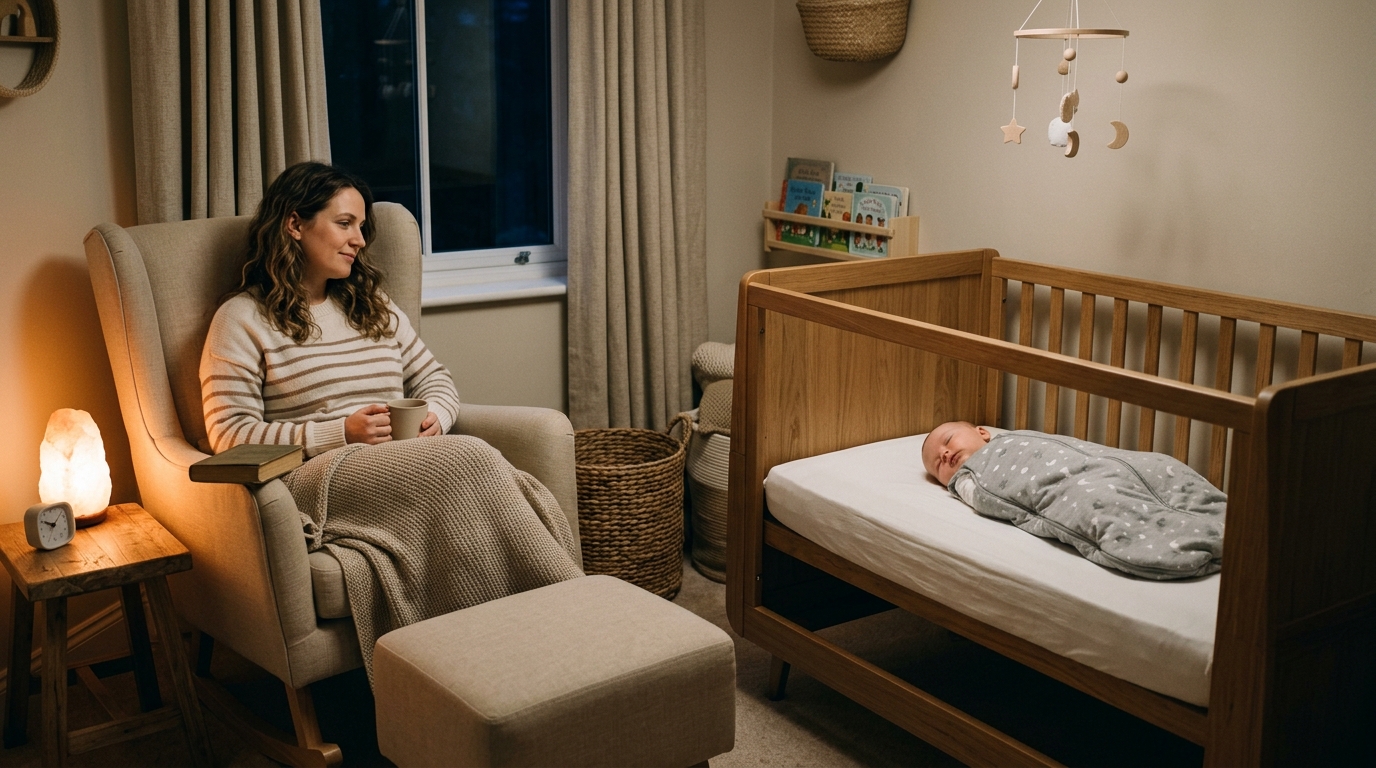
When Can Babies Sleep Through the Night Without Feeding?
Most babies are physically capable of sleeping through the night without a feed between 6 and 9 months of age, provided they are meeting growth milestones. However, 'sleeping through' is often defined as a 6-to-8-hour stretch, and many healthy infants continue to require one night feed until 12 months of age.
Please note: This article provides general information and should not be taken as medical advice. Always speak to your GP or health visitor regarding your baby's growth, health, or specific nutritional needs.
What does 'sleeping through the night' actually mean?
For an exhausted parent in the UK, 'sleeping through' usually means a solid 12 hours of peace from 7pm to 7am. However, from a clinical and developmental perspective, the definition is quite different. Most researchers and paediatricians define sleeping through the night as a continuous stretch of 6 to 8 hours. If your baby settles at 7pm and wakes at 3am for a feed, they have technically 'slept through' the first half of the night.
In the early months, night feeds are a biological necessity. Newborns have tiny stomachs and require frequent milk to support their rapid brain development and physical growth. As they grow, their stomach capacity increases, and their ability to store glucose in the liver improves, allowing them to go longer between meals. By the time a baby reaches 6 months, many are physiologically capable of taking a longer break, but this is not a hard and fast rule. Every child is an individual, and factors such as birth weight, temperament, and whether they are breastfed or bottle-fed can influence their timeline.
Developmental milestones and night feeds
The transition away from night feeds is closely linked to several developmental milestones. Growth, daytime milk intake, development and overall health are all important factors when considering whether a baby may be ready to reduce night feeds. Secondly, the introduction of solid foods around the 6-month mark plays a role. As babies begin to consume more calorie-dense solids during the day, their reliance on milk for overnight energy naturally decreases.
However, it is a common myth that 'filling them up' with extra solids or baby rice will automatically lead to a full night's sleep. Sleep is a complex neurological process, not just a digestive one. While nutrition is the foundation, the ability to transition between sleep cycles without needing a feed to fall back to sleep is a skill that develops over time. At Nourished Nights, we look at the whole picture, nutrition, environment, and emotional connection, to understand why a baby might still be waking. Below is a table of how night feeding often changes with age. Please note that these are general patterns, not targets.
| Age Range | Typical Night Feed Frequency | Biological Context |
|---|---|---|
| 0-3 Months | 3-5 feeds | Small stomach capacity; rapid growth. |
| 3-6 Months | 2-3 feeds | Increased stomach capacity; longer sleep stretches. |
| 6-9 Months | 1-2 feeds | Introduction of solids; caloric shift to daytime. |
| 9-12 Months | 0-1 feeds | Most calories consumed during daylight hours. |
| 12+ Months | 0 feeds | Night feeds usually become a comfort habit. |
Is your baby ready to drop the night feed?
Deciding when to reduce night feeds is a personal choice for every family. Some parents are happy to continue a 'dream feed' or a middle-of-the-night snuggle well into the first year, while others feel the toll of sleep deprivation requires a change. There are several signs that your baby might be ready to drop a feed. If they are only taking a very small amount of milk and then falling back to sleep, or if they are waking at the exact same time every night regardless of how much they ate at bedtime, it may be a 'habitual' wake rather than a 'hunger' wake.
Another sign of readiness is their daytime appetite. If your baby is 'grazing' during the day or seems disinterested in their morning milk, it could be because they are taking too many calories overnight. By gently shifting those calories to the daytime, you can help their body adjust to a longer fast at night. If you are unsure, a responsive sleep consultant can help you look at your baby's unique patterns to determine if they are truly hungry or simply seeking comfort.
| Sign of Readiness | Habitual or Comfort Waking |
|---|---|
| Taking full, focused feeds during the day. | Waking at the exact same time every night. |
| Consuming a variety of solids (if over 6m). | Only taking a 'sip' or a short 2-minute breastfeed. |
| Reaching weight milestones and healthy growth. | Needing the feed specifically to fall back to sleep. |
| Waking at different times each night. | Falling asleep immediately after the dummy or a pat. |
How does biological sleep architecture affect night waking?
Understanding how babies sleep can take the pressure off parents who feel they are 'doing something wrong.' Human sleep is not a flat line of unconsciousness; it consists of cycles. For infants, these cycles are about 45 to 50 minutes long. At the end of each cycle, there is a 'partial arousal' where the baby briefly wakes to check their environment. If everything is the same as when they fell asleep, they may drift into the next cycle. However, if they were fed to sleep, they may feel they need that same 'prop' to get back to sleep.
This is particularly evident when navigating the 9 month sleep regression, where increased mobility and cognitive leaps can cause more frequent arousals. During these times, babies often seek the comfort of a feed not because they are starving, but because it is the most effective way they know to regulate their nervous system and return to sleep. Recognising this difference allows us to respond with empathy while slowly introducing other ways to soothe.
The role of responsive sleep support in night weaning
Many parents worry that the only way to stop night feeds is to use 'cry-it-out' or extinction methods. At Nourished Nights, we never recommend leaving a baby to cry. Instead, we use gentle sleep support techniques that honour the attachment between parent and child. Night weaning or reducing feeds should be a gradual, compassionate process. We believe in being responsive to your baby's needs while slowly changing the way those needs are met.
Our approach is loosely informed by structured evaluation frameworks like the Kirkpatrick Model, where we assess the effectiveness of our guidance based on the family's reaction, the learning of new settling skills, and the long-term impact on the family's wellbeing. By focusing on a 'calm nights reset,' we help parents move away from feeding as the primary sleep association, replacing it with rhythmic patting, shushing, or physical presence, ensuring the baby always feels safe and supported.
Why do older babies still wake for milk?
If your baby is over 10 or 12 months old and still waking multiple times for milk, there are usually several factors at play. Separation anxiety often peaks around this age, making the night-time feel quite daunting for a little one. The breast or bottle represents the ultimate comfort and a guaranteed way to bring their caregiver close. Additionally, physical milestones like crawling, cruising, or walking can overstimulate the nervous system, leading to more restless sleep.
For some, it may be a case of 'reverse cycling,' where the baby is so busy exploring during the day that they forget to eat enough, and then make up for those calories at night. If you find yourself in this position, you might find our guide on night weaning your toddler helpful. It focuses on how to communicate these changes to an older child who has a deeper emotional attachment to their night-time milk routine.
Practical steps for a gentle transition
When you feel the time is right to reduce night feeds, it is best to do so slowly. For bottle-fed babies, this might mean reducing the number of ounces in each night bottle by one every few nights. For breastfed babies, you might slowly reduce the time spent on the breast. This gives the baby's digestive system and metabolism time to adjust to the change. Always ensure that daytime feeds are offered in a calm, distraction-free environment to maximise intake.
Consistency is key. Establishing a solid bedtime routine helps signal to the baby's brain that the long stretch of sleep is coming. If you are looking for effective and compassionate alternatives to crying it out, consider the 'gradual retreat' method. This involves staying with your baby while they learn to settle in their cot, providing comfort through touch and voice rather than milk. It takes patience, but it preserves the trust between you and your child.
Safety first: UK safer sleep guidelines
Regardless of how many times your baby wakes for a feed, their sleep environment must always be safe. In the UK, we follow the guidance provided by The Lullaby Trust and the NHS. This includes placing your baby on their back to sleep, in a clear cot or Moses basket, in the same room as you for the first six months. The cot should be free of pillows, duvets, bumpers, or soft toys, which can pose a suffocation risk. Ensuring the room is at a comfortable temperature (16-20°C) and using a well-fitted baby sleeping bag can also help your baby sleep more soundly. For more detailed safety information, visit The Lullaby Trust.
FAQ
Is it normal for a 6-month-old to still wake for two feeds? Yes, it is entirely normal. While some babies can go longer, many 6-month-olds still require 1-2 feeds, especially during growth spurts or when they are first starting solids. Every baby's caloric needs are different.
Does giving formula at night help babies sleep longer than breastfeeding? This is a common misconception. Research shows that there is very little difference in total sleep time between breastfed and formula-fed babies. Sleep is more closely related to developmental maturity and sleep associations than the type of milk.
How can I tell if my baby is waking from hunger or for comfort? Hunger wakes are usually more vigorous and the baby will take a full feed. Comfort wakes often happen at the same time every night, and the baby may only suckle for a few minutes before drifting back to sleep.
Should I try a 'dream feed' to help my baby sleep through? A dream feed (feeding the baby while they are asleep around 10pm-11pm) works well for some families but can disrupt sleep cycles for others. If it helps you get a longer stretch of sleep, it is a useful tool, but it is not a guaranteed fix.
When should I speak to a professional about my baby's night waking? If you are concerned about your baby's growth, if they seem to be in pain (reflux or allergies), or if the sleep deprivation is severely affecting your mental health, speak to your GP or health visitor. For support with sleep habits and routines, a sleep consultant can offer guidance.
Navigating the world of baby sleep can be overwhelming, but you don't have to do it alone. If you're feeling exhausted and need a plan that respects your baby's needs and your parenting style, Nourished Nights is here to help. Whether you're looking for a quick review or a full transformation, our attachment-focused approach ensures your family can find rest without the tears. Download our free sleep guide today or book a free 20-minute discovery call to start your journey toward calmer nights.