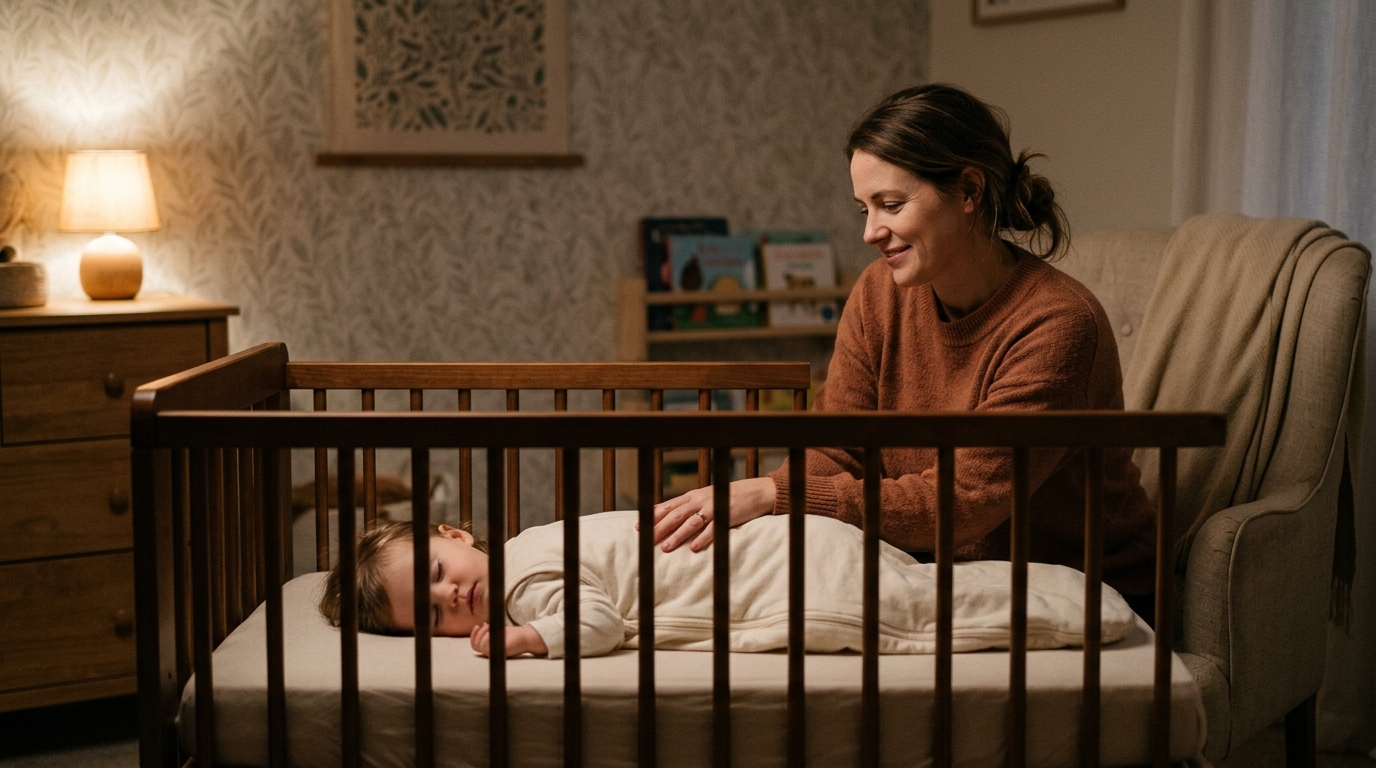
2 Year Old Waking at Night: A Gentle Guide to Toddler Sleep
A 2 year old waking at night is typically caused by the 24-month sleep regression, peak separation anxiety, or changing daytime nap needs. Most toddlers require 11 to 14 hours of total sleep daily; refining the bedtime routine and using responsive settling techniques can typically resolve these disruptions within 14 to 21 days.
It can feel incredibly disheartening when, after months of relatively stable sleep, your toddler begins waking frequently or resisting bedtime with newfound vigour. You might find yourself back in the room multiple times a night, or perhaps your little one is suddenly demanding you stay until they are fast asleep. This phase is common, yet exhausting for parents who thought they had moved past the sleepless nights of the baby stage.
At Nourished Nights, we believe in supporting these transitions with empathy and responsiveness. We never recommend leaving a child to cry alone; instead, we look at the underlying causes of why a 2 year old is waking at night and address them through the lens of attachment and child development. This guide will explore the common triggers for toddler sleep disruptions and provide practical, gentle steps to help your whole family get more rest.
Why is my 2 year old waking at night suddenly?
The age of two is a period of monumental cognitive and emotional growth. While these milestones are exciting, they often come with a temporary side effect: disrupted sleep. Understanding the 'why' behind the wakes is the first step in responding with patience and effectiveness.
One of the primary reasons for a 2 year old waking at night is the 24-month sleep regression. Unlike earlier regressions, this one is heavily influenced by the toddler's developing sense of autonomy and 'will'. They are beginning to understand that they have choices and can exert control over their environment, starting with whether or not they stay in their cot. This is also a peak time for separation anxiety, as their burgeoning imagination makes the world feel like a slightly more unpredictable place.
- Language Explosion: Their brains are busy processing new words and complex sentences, which can keep them awake at night as they 'practise' in their sleep.
- Imagination and Fears: At two, children start to develop a sense of fear. Shadows in the corner or a slightly open wardrobe door can suddenly become sources of anxiety.
- Physical Discomfort: The final set of molars often makes an appearance around the second birthday, causing genuine discomfort that can lead to night wakes.
- Boundary Testing: This is a normal developmental stage where toddlers test the limits of their environment to feel secure in their boundaries.
Understanding the 24-Month Sleep Regression
The 24-month sleep regression is often considered one of the most challenging because of the toddler's physical mobility and verbal ability. They can now tell you exactly what they want, usually 'one more story' or 'a sip of water' and they have the stamina to protest for longer than they did as infants. This regression can manifest as difficulty falling asleep, long periods of wakefulness during the night (often called 'split nights'), or early morning starts.
During this time, it is vital to maintain a consistent approach. While it may be tempting to try 'cry-it-out' methods out of desperation, these can often increase a toddler's anxiety and lead to more persistent sleep issues. Instead, focusing on gentle sleep support allows you to remain a 'secure base' for your child. By responding to their needs while gently holding the boundary of sleep, you help them navigate this transition without damaging the attachment bond.
| Feature of Regression | Common Behaviour | Responsive Solution |
|---|---|---|
| Boundary Testing | Asking for multiple items at bedtime | Use a 'bedtime pass' or a firm 'last request' rule. |
| Separation Anxiety | Crying when you leave the room | Gradual retreat or 'check-ins' to provide reassurance. |
| Nighttime Fears | Fear of the dark or 'monsters' | Introduce a dim, warm-toned nightlight and comfort object. |
| Nap Resistance | Refusing the midday nap | Offer 'quiet time' if the nap doesn't happen to prevent overtiredness. |
How much sleep does a 2 year old actually need?
Sleep needs vary from child to child, but there are general benchmarks that can help you determine if your toddler is getting enough rest. On average, a two-year-old needs between 11 and 14 hours of sleep in a 24-hour period. This is usually split between a 10–12 hour night and a 1–2 hour afternoon nap.
If your child is getting too much daytime sleep, it can reduce their 'sleep pressure' for the night, leading to a 2 year old waking at night and being unable to settle back down. Conversely, if they are dropped to no nap too early, they can become overtired, which triggers the production of cortisol and makes it harder for them to stay asleep. Balancing this schedule is a delicate art.
For more detailed guidance on handling daytime transitions, you might find our article on Understanding Toddler Nap Refusal particularly helpful. Identifying whether your child is ready to shorten their nap or if they are simply going through a phase of resistance is key to fixing night wakes.
Is it time to drop the nap?
Many parents wonder if the reason for their 2 year old waking at night is that they no longer need their afternoon nap. While some children do drop their nap around age two, the majority still need it until closer to age three or even four. Dropping the nap too early is a frequent cause of 'false starts' (waking shortly after bedtime) and early morning wakes.
Signs your toddler might be ready to reduce (but not necessarily drop) their nap include:
- Taking a very long time to fall asleep at night (often 9pm or later).
- Consistently refusing the nap but remaining happy and energetic until bedtime.
- Waking up in the middle of the night for 1-2 hours and being 'ready to play'.
If you suspect the nap is the culprit, try capping it at 60 or 90 minutes rather than eliminating it entirely. This preserves some daytime rest while ensuring they are tired enough for a solid night's sleep. When adjusting schedules, we often use the Kirkpatrick Model principles of evaluation in our professional practice to assess how these changes impact the child's overall well-being and the family's 'results' (better sleep).
Gentle Strategies for Responding to Night Wakes
When your 2 year old is waking at night, how you respond matters. At Nourished Nights, we advocate for a responsive approach that validates the child's feelings while encouraging sleep. If your toddler wakes and calls for you, it is important to go to them. This reinforces their sense of safety.
If you are looking for Effective and Compassionate Alternatives to Crying It Out, consider the 'Parental Presence' method. This involves staying in the room with your toddler, perhaps sitting on a chair near the cot or bed, and offering verbal reassurance or a gentle pat. Over several nights, you gradually move your chair further away until you are outside the door. This method supports the child's need for closeness while slowly building their confidence in sleeping independently.
For families who are still breastfeeding or bottle-feeding at night, wakes may be linked to a desire for comfort or calories. If you feel it is the right time to move away from night feeds, our guide on Night Weaning Toddler offers a step-by-step, responsive process to do so without distress.
Physical and Environmental Considerations
Sometimes the cause of a 2 year old waking at night is purely environmental. As toddlers become more active, their bedding can become tangled, or they may kick off their blankets and wake up cold. Ensuring the room temperature is between 16-20°C, as recommended by The Lullaby Trust, is essential for safe and comfortable sleep.
Consider the following checklist for a sleep-optimised room:
- Blackout Blinds: Even a small amount of light from a streetlamp or the early morning sun can signal the brain to wake up.
- White Noise: This can mask household sounds or birdsong that might disturb a light sleeper.
- Appropriate Bedding: If your toddler is still in a cot, a sleeping bag is often safer and more effective at keeping them warm than a loose duvet.
- Comfort Object: If your child is over 12 months old, introducing a small 'lovey' or soft toy can provide significant comfort during night wakes.
It is also worth checking for physical issues. Is your child suffering from glue ear, enlarged tonsils, or reflux? If your child snores, breathes through their mouth, or seems to struggle for breath during sleep, please consult your GP or health visitor, as these can be signs of sleep-disordered breathing which requires medical attention.
Creating a Consistent Bedtime Routine
A predictable bedtime routine is the anchor of a good night's sleep. For a two-year-old, this routine should be around 30 to 45 minutes long and entirely screen-free. The blue light from tablets and televisions inhibits the production of melatonin, the sleep hormone, making it much harder for a toddler to settle.
A typical gentle routine might look like:
- A warm bath (helps lower core body temperature, signalling sleep).
- Nappy change or potty time and pyjamas.
- Two short books or one longer story.
- A brief 'recap' of the day (helps process emotions).
- A consistent phrase or song (e.g., "I love you, you are safe, it's time for sleep").
Consistency is key. When a toddler knows exactly what to expect, their nervous system begins to relax before they even hit the mattress. If you find the bedtime process is becoming a battleground, a responsive sleep consultant can help you tweak the timing and flow to reduce power struggles.
The Role of Nutrition and Screen Time
What happens during the day significantly impacts the night. At age two, toddlers are often 'picky' eaters. Ensuring they have a balanced dinner with complex carbohydrates (like oats, wholemeal bread, or sweet potato) can help maintain steady blood sugar levels throughout the night, preventing wakes caused by hunger. Avoid sugary snacks or caffeinated drinks (including some chocolates) in the afternoon.
Screen time should ideally be avoided for at least two hours before bed. Research suggests that the stimulation from fast-paced cartoons can be overstimulating for a toddler's developing brain, leading to increased night wakes and difficulty falling asleep. Instead, focus on low-sensory activities like puzzles, colouring, or block play in the hour before the bedtime routine begins.
When to Seek Professional Support
If you have tried adjusting the schedule, refining the routine, and responding gently, but your 2 year old is still waking at night frequently, it might be time for more personalised support. Every child is unique, and sometimes a fresh, expert pair of eyes can identify patterns that are hard to see when you are in the thick of sleep deprivation.
At Nourished Nights, we offer several levels of support, from a written sleep review to our comprehensive four-week transformation package. Our approach is always rooted in science and attachment; we never ask you to ignore your child's cries. Instead, we work with you to create a bespoke plan that respects your parenting style and your child's temperament.
Note: The information provided in this article is for general informational purposes only and does not constitute medical advice. Always consult with your GP or health visitor if you have concerns about your child's health, growth, or development.
FAQ
Question? Why has my 2 year old suddenly started waking up at 3am? This is often a sign of the 24-month sleep regression or a 'split night' caused by too much daytime sleep. Check if their nap needs to be capped and ensure they aren't getting too much total sleep in 24 hours.
Question? How long does the 2-year sleep regression last? Most sleep regressions last between two and six weeks. Maintaining a consistent, responsive approach and avoiding the introduction of new 'sleep props' you don't want to keep long-term will help it pass more quickly.
Question? Should I move my 2 year old to a toddler bed if they are waking at night? It is generally best to wait until at least age three or until they are safely climbing out of the cot. Moving to a bed too early often increases night wakes because the toddler lacks the impulse control to stay in bed.
Question? Can molars cause a 2 year old to wake at night? Yes, the second molars typically emerge around age two and can be quite painful. If your child is drooling more, chewing on their hands, or seems genuinely distressed, teething may be the culprit.
Question? Is it normal for a 2 year old to have night terrors? Night terrors can begin around age two, though they are more common in older children. Unlike nightmares, the child is not actually awake during a night terror and usually has no memory of it the next day.
If you are struggling with your 2 year old waking at night and feel like you’ve tried everything, please know you don’t have to navigate this alone. You can download our free sleep guide for immediate tips, or book a free 20-minute discovery call to discuss how we can work together to bring peace back to your nights.