Why Your Baby Cries When Put Down to Sleep: A Gentle Guide to Peaceful Transfers
A baby cries when put down to sleep primarily due to the Moro reflex, a sudden drop in body temperature, or a biological need for proximity. This reaction is a survival mechanism. Most infants begin to tolerate independent sleep surfaces more successfully between 4 and 6 months as their nervous systems mature and startle reflexes fade.
It is one of the most common challenges faced by new parents: your baby is fast asleep in your arms, their breathing is rhythmic, and their body is heavy. Yet, the moment their back touches the cot mattress, their eyes fly open, and they begin to cry. This 'ninja-transfer' failure can be exhausting, leaving parents feeling trapped by contact naps or stuck sitting in a dark room for hours. At Nourished Nights, we believe in understanding the 'why' behind these tears to provide gentle sleep support that respects your baby’s needs and your sanity.
Please note that the content of this article is for general information only and does not constitute medical advice. If you have any concerns about your baby’s health, growth, or breathing, please speak to your GP or health visitor.
Why does my baby cry as soon as I put them in the cot?
To understand why a baby cries when put down to sleep, we must look at their biology. For a baby, being held represents safety, warmth, and food. When they are put down, several physiological triggers can occur simultaneously. The most prominent is the Moro reflex, often called the 'startle reflex.' This is an involuntary protective response that makes a baby feel as though they are falling. When you lower a baby into a cot, the change in gravity and the sensation of 'losing' the support of your arms can trigger this reflex, causing them to jerk their limbs and wake up in a state of alarm.
Furthermore, babies have a highly developed sense of smell and thermoreception. Your body is a consistent 37 degrees Celsius, while a cot mattress, even in a well-heated room, is significantly cooler. That sudden temperature drop can signal to their brain that they are no longer in the safe 'nest' of their parent. When you combine this with the loss of your familiar scent, it is no wonder they protest. This is particularly common during the early months, as discussed in our guide on a newborn not sleeping at night.
The Science of Sleep Cycles and the 'Transfer'
Timing is everything when it comes to the transfer. Human sleep is divided into cycles, and for infants, these cycles start with 'active sleep' (REM). During active sleep, babies are easily startled; their eyes may flicker, their limbs might twitch, and they are highly tuned to their environment. If you attempt to put them down during this phase, they are almost guaranteed to wake up.
It usually takes about 20 minutes for a baby to move from active sleep into 'quiet sleep' (deep sleep). You can often tell they have reached this stage because their limbs become limp, the 'floppy arm test' is a classic parenting trick for a reason. However, as babies grow, their sleep architecture changes. Around the four-month mark, they begin to cycle through sleep more like adults, which is often when parents notice a significant shift in how easily their baby is disturbed. This is a key feature of the 6 month sleep regression, where previously 'good' sleepers suddenly struggle with being put down.
How can I put my baby down without them waking up?
The goal is to minimise the sensory 'shock' of the transfer. This involves a combination of physical positioning and environmental management. Always ensure your baby’s sleep environment aligns with the Lullaby Trust’s safer sleep guidance: a clear, flat, firm, waterproof mattress in a cot or Moses basket in the same room as you for the first six months. You can find more detailed safety standards via the Lullaby Trust.
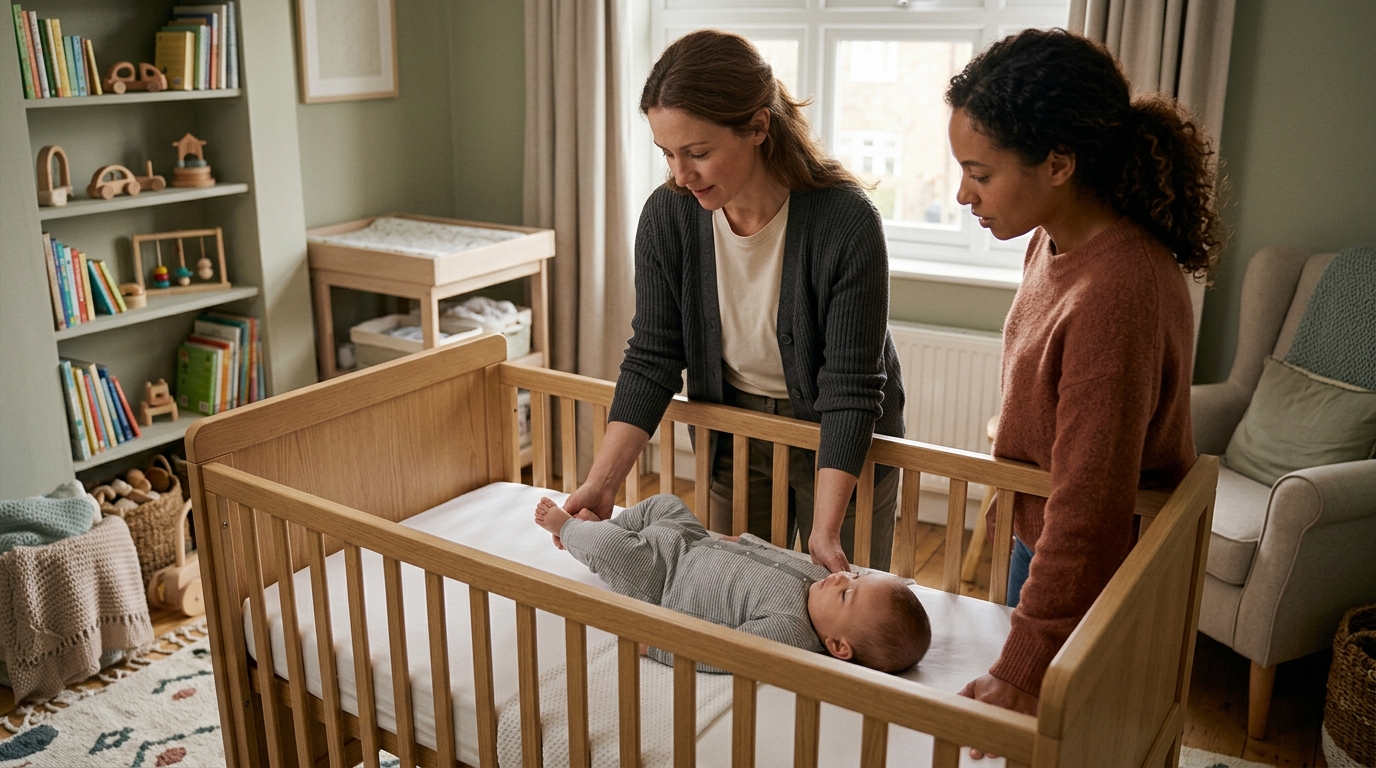
One of the most effective techniques is the 'feet-first' landing. When you lower a baby head-first, it triggers the sensation of falling much more intensely. Instead, try lowering them so their feet touch the mattress first, followed by their bottom, and finally their head. Keep your hands on them for several seconds after they have touched the mattress to provide a continued sense of security and warmth.
| Technique | Description | Best For |
|---|---|---|
| The Slow-Motion Transfer | Lowering feet, then bottom, then head over 30 seconds. | Newborns with a strong Moro reflex. |
| The Side-Settle | Placing the baby on their side briefly while patting (then rolling to back). | Babies who need rhythmic comfort to stay asleep. |
| The Warmth Bridge | Using a wheat bag (removed before laying baby) to take the chill off the cot. | Babies sensitive to temperature changes. |
Understanding Separation Anxiety and Proximity Needs
As babies reach the 7 to 9-month mark, the reason they cry when put down often shifts from the physical (reflexes) to the emotional (separation anxiety). At this age, babies begin to understand 'object permanence', the idea that you still exist even when you are out of sight. This can make the act of being put down in a cot feel like a permanent abandonment.
In these instances, a responsive sleep consultant will recommend building 'sleep layers' rather than using extinction methods. This means introducing comfort measures that don't involve being held, such as a consistent phrase, a gentle pat, or the presence of a familiar sleep sack, while still responding to their cries. For families struggling with this transition, learning how to stop contact naps gently can provide a roadmap for increasing independence without breaking the attachment bond.
Is it okay to keep trying if they cry?
Many parents worry that by responding to their baby's cries, they are 'creating bad habits.' At Nourished Nights, we reject this notion. Responding to your baby's distress is a fundamental part of secure attachment. If your baby cries when put down, it is their only way of communicating that the transition felt unsafe or uncomfortable. It is perfectly okay to pick them up, soothe them, and try again when they are calm.
There is a middle ground between 'holding them forever' and 'leaving them to cry.' You can offer comfort while they are in the cot by placing a firm hand on their chest or humming softly. If the crying escalates, picking them up is the responsive thing to do. Over time, as their nervous system matures and they build trust in their sleep space, the need for constant physical contact will naturally diminish.
Creating a Responsive Sleep Environment
A responsive environment is one that cues the baby’s brain for sleep without causing alarm. This includes using low-level red light for night changes, white noise to mask household sounds, and a consistent bedtime routine. In the UK, we often recommend a bath, a massage, and a story to help lower cortisol levels before the 'big transfer' to the cot.
If you find that your baby is consistently distressed despite your best efforts, it may be worth looking at their overall sleep pressure. A baby who is 'undertired' will fight the cot because they simply aren't ready to sleep, while an 'overtired' baby will have higher levels of cortisol, making the Moro reflex more sensitive. Balancing naps and wake windows is a key part of the work we do at Nourished Nights to help families achieve calmer evenings.
FAQ
Why does my baby wake up the moment their head touches the mattress? This is usually due to the Moro reflex or the 'falling' sensation triggered by a head-first transfer. Try landing their feet and bottom first while keeping your chest close to theirs for a few moments to maintain warmth.
Is it normal for a 6-month-old to cry when put down? Yes, this is often linked to the 4-6 month sleep progression and the onset of separation anxiety. At this age, they are more aware of their surroundings and may protest the loss of your proximity.
How long should I wait before picking them up if they cry? There is no set rule, but a responsive approach suggests picking them up as soon as their cry signals distress that cannot be soothed by a touch or a voice. You want to keep the sleep space associated with safety, not fear.
Does "drowsy but awake" actually work? It can work for some, but many babies find it frustrating. A more responsive alternative is 'supported independent sleep,' where you stay with them and offer physical comfort as they drift off in their cot.
Can a sleep consultant help without using cry-it-out? Absolutely. A responsive sleep consultant focuses on sleep hygiene, biology, and attachment-focused settling techniques rather than leaving a child to cry. We look at the whole picture of the child's day and development.
If you are feeling exhausted and the cot feels like a battleground, remember that you don't have to navigate this alone. Whether you need a quick bit of advice or a total overhaul of your family’s sleep habits, I am here to help. You can download my free sleep guide for immediate tips, or book a free 20-minute discovery call to discuss how we can work together to bring peace back to your nights.