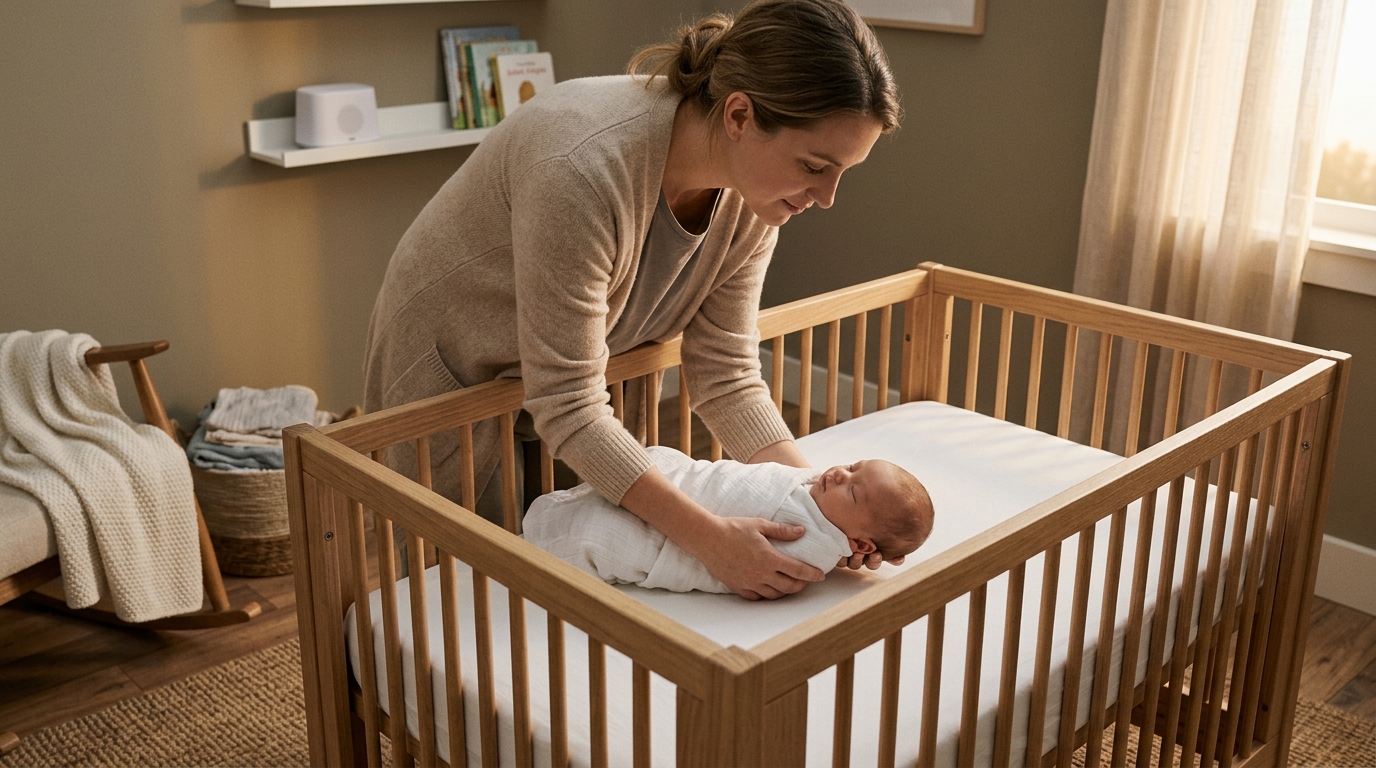
How to Stop Contact Naps
To stop contact naps, gradually transition your baby to a cot by layering sleep associations and using a responsive fading approach over 7 to 14 days. Start by introducing a consistent pre-nap routine and warming the cot surface before gently transferring your baby while they are drowsy but still aware of their surroundings.
Please note: This article provides general information and guidance on baby sleep; it is not a substitute for professional medical advice. If you have concerns about your child’s health, growth, or development, please consult your GP or health visitor.
What are contact naps and why do they happen?
Contact naps occur when a baby or toddler sleeps exclusively while being held, worn in a sling, or lying on a parent. For many families, this is a beautiful way to bond, especially in the early months known as the 'fourth trimester'. From a biological perspective, babies are hardwired to seek proximity. Being close to a caregiver provides warmth, the familiar sound of a heartbeat, and a sense of absolute safety.
Biologically, your baby does not know they are in a safe, modern nursery; their instincts tell them that being alone is a risk. This is why many babies will wake the moment they are placed in a cot. While contact napping is a valid and lovely way to support sleep, there often comes a point where it is no longer sustainable for the parents. Whether you need to return to work, care for older siblings, or simply need a moment of physical autonomy, wanting to know how to stop contact naps is a common and reasonable goal for many UK parents.
Is it normal for my baby to only sleep on me?
It is entirely normal and developmentally appropriate. In fact, many cultures around the world practice constant proximity for sleep. However, in our modern society, the pressure for babies to be 'independent' sleepers early on can create significant stress for parents. At Nourished Nights, we believe in validating the normalcy of contact sleep while providing the tools to shift toward independent sleep when the family is ready.
If your baby only sleeps on you, it isn't because you have 'spoilt' them or 'created a rod for your own back'. It is because you have provided a responsive and secure environment where they feel safe enough to drift off. Transitioning away from this is not about removing that security, but about gently expanding their 'circle of safety' to include their cot or Moses basket. As a responsive sleep consultant, I see many families who feel guilty for contact napping, but it is often the most natural starting point for infant sleep.
When is the right time to transition to cot naps?
There is no 'perfect' age to stop contact naps, but there are signs that both you and your baby might be ready. For many, the transition happens around the 4-to-6 month mark, as sleep cycles mature and the 'startle reflex' (Moro reflex) begins to fade. You might consider starting the transition if:
- The contact naps are no longer resulting in restful sleep for your baby.
- Your own physical health or mental well-being is being impacted by the lack of freedom.
- You are preparing for a change in childcare arrangements.
- Your baby is becoming more distracted by your presence and might actually sleep better in a quiet, dark space.
If you find yourself in the midst of the 6 month sleep regression, you might find that contact naps become even more frequent as your baby seeks extra comfort during a time of significant developmental change. This can be a challenging time to start a transition, but with a gentle approach, it is entirely possible.
How to stop contact naps using a responsive approach
At Nourished Nights, we never advocate for 'extinction' methods or leaving a baby to cry. We focus on gentle sleep support that respects the attachment bond. To stop contact naps responsively, we use a method called 'habit stacking' or 'layering associations'. This involves introducing new, portable sleep cues while the baby is still sleeping on you, then slowly removing the contact once the new cues are established.
Unlike traditional sleep training, which often involves a sudden change, a responsive approach allows the baby to process the change with your support. You might wonder, does sleep training work if you don't use cry-it-out? The answer is yes; by working with child development and sleep science, we can encourage independent sleep without compromising the trust your baby has in you.
| Feature | Contact Nap | Cot Nap (Goal) |
|---|---|---|
| Primary Association | Parent's body/warmth | Cot surface/environment |
| Responsiveness | Immediate | Responsive but physical distance |
| Duration | Often longer (assisted) | Initially shorter, then consolidates |
| Safety | Requires parent to stay awake | Aligned with Lullaby Trust guidance |
Step-by-step: The gentle transition from chest to cot
The transition from chest to cot is a journey, not a single event. Here is a step-by-step guide to doing it gently:
- Layer New Associations: While still contact napping, introduce a white noise machine and a consistent scent (like a breast pad tucked into your top that you then place safely near the cot, never in it). Use a specific phrase or 'sleep trigger' like "time for sleep, little one."
- The Environment: Ensure the nursery is pitch black and at a comfortable temperature (16-20°C). Use a sleeping bag suitable for the season.
- Warming the Cot: Use a wheat bag or hot water bottle to warm the cot mattress before placing the baby down (remove the heat source before laying the baby down). This prevents the 'cold shock' that often wakes babies during a transfer.
- The Transfer: Wait until your baby is in a deep sleep (the 'floppy arm' stage, usually 15-20 minutes in). Transfer them feet-first, then bottom, then head. This keeps their sense of equilibrium stable.
- Hands-On Settling: Once they are in the cot, keep your hands on them for a few minutes. Pat their chest or stroke their forehead gently. This mimics the 'contact' part of the nap while they are in the new space.
Safe sleep environments for daytime rest
When moving away from contact naps, it is vital to ensure the new sleep space is safe. In the UK, we follow the guidance provided by The Lullaby Trust and the NHS. This means the baby should always be placed on their back, on a firm, flat, waterproof mattress in a clear cot or Moses basket. There should be no pillows, duvets, bumpers, or soft toys in the sleep space, as these pose a suffocation risk.
Daytime sleep should be treated with the same safety rigour as night-time sleep. If you are using a pram or a sling for naps, ensure the baby's airway is always clear and they do not become overheated. A safe environment is the foundation of a restful nap.
Can a consistent routine help with independent napping?
Yes, a consistent routine is one of the most powerful tools in your kit. It helps to set the baby's internal biological clock (the circadian rhythm) and prepares their brain for the transition from 'awake and alert' to 'calm and sleepy'. A nap routine doesn't need to be long—10 to 15 minutes is usually enough. It might include a nappy change, a short story, a quick cuddle, and putting on their sleeping bag.
| Timeframe | Action | Purpose |
|---|---|---|
| 30 mins before | Low stimulation play | Lowering cortisol levels |
| 15 mins before | Enter the bedroom/dim lights | Signalling the change in environment |
| 10 mins before | Nappy change & sleeping bag | Physical comfort and sleep cue |
| 5 mins before | Cuddle & sleep phrase | Emotional connection and final cue |
Troubleshooting common nap challenges
Even with the best plan, you might encounter hurdles. One common issue is the 'crap nap', a nap that lasts exactly 30 or 45 minutes. This happens because the baby completes one sleep cycle but doesn't know how to transition into the next without the physical contact they are used to. If this happens, try 'wake to sleep' (gently stirring them 5 minutes before they usually wake) or be ready at the door to offer a quick pat and shush the moment they stir.
Another challenge is nap refusal. If your baby is fighting the cot nap, don't force it for hours. If they haven't settled after 20-30 minutes of responsive support, it is okay to do a 'rescue nap' (a contact nap or pram nap) to ensure they don't become overtired. Overtiredness makes the next nap even harder to achieve.
Prioritising parental well-being
Learning how to stop contact naps is often as much about the parent as it is about the baby. It is okay to feel a sense of loss when you no longer have those long cuddles, just as it is okay to feel a sense of immense relief when you finally have your arms back. Nourished Nights is here to support you through these emotions without judgement. Whether you choose a Sleep Clarity Call or a full transformation package, our goal is to ensure the whole family gets the rest they need.
FAQ
Question: How long does it take to stop contact naps? Answer: Most families see a significant shift within 7 to 14 days of consistent, responsive practice. It depends on the baby's temperament and how long contact naps have been the primary sleep association.
Question: Will my baby cry if I stop contact napping? Answer: Your baby may express frustration or protest the change, but with a responsive approach, you are there to comfort them. We never leave a baby to cry alone; you will be supporting them through every step of the transition.
Question: Can I still do one contact nap a day? Answer: Absolutely. Many parents choose to do the first nap of the day in the cot and keep the afternoon nap as a contact nap or 'on-the-go' nap. Flexibility is key to a happy family life.
Question: What if my baby wakes up the second I put them down? Answer: This is often due to the Moro reflex or the temperature change. Try warming the cot and using a very slow, 'bottom-first' transfer to keep their nervous system calm.
Question: Does stopping contact naps help with night sleep? Answer: Often, yes. As a baby learns they are safe and capable of sleeping in their own space during the day, this confidence often translates to better settling and longer stretches at night.
If you are feeling overwhelmed by the transition to independent sleep, remember that you don't have to do this alone. You can download our free sleep guide for more gentle tips, or book a free 20-minute discovery call with Nourished Nights to discuss how we can support your family in achieving restful, calm nights and confident daytime naps.