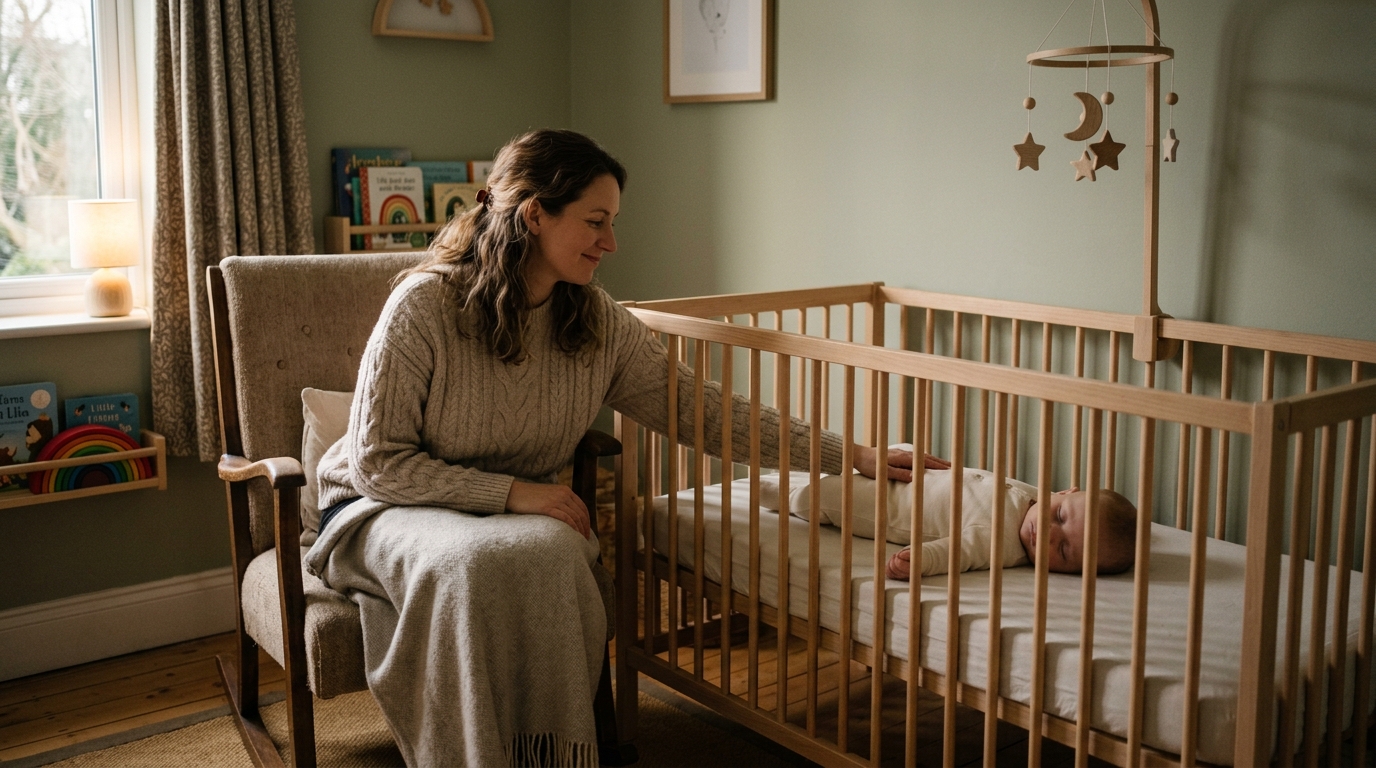
Finding the Right No Cry Sleep Solution: A Gentle Guide for Responsive Parents
A no cry sleep solution is an attachment-focused approach to improving infant sleep that rejects the use of extinction methods. By optimising sleep hygiene, aligning with biological rhythms, and using 100% responsive settling techniques, families typically see a 60-80% improvement in night wakings and bedtime resistance within 14 to 21 days while maintaining a secure bond.
For many parents, the standard advice of "leaving them to it" feels wrong. If you are looking for a way to support your child’s sleep that doesn’t involve closing the door and walking away, you are in the right place. This guide explores how to implement a gentle sleep strategy that respects your child’s development and your own parental instincts.
Note: This article provides general information and is not medical advice. Always consult your GP or health visitor regarding your child’s health, growth, or any medical concerns. All sleep environment advice follows UK safer sleep guidance from The Lullaby Trust.
What is a No Cry Sleep Solution?
The term "no cry sleep solution" often refers to a philosophy of infant sleep that prioritises the emotional wellbeing of the child alongside the need for rest. Unlike traditional sleep training, which often focuses on stopping a behaviour (crying) through non-response, gentle sleep support focuses on the underlying reasons why a child is struggling to settle or stay asleep.
At its heart, this approach is about responsiveness. It means that when your baby cries, you respond. You might offer a cuddle, a feed, or simply your presence. The goal isn't necessarily to ensure there is never a single tear, babies use crying as communication, after all, but to ensure that your child never has to cry alone. By being a "responsive sleep consultant" for your own child, you are teaching them that sleep is a safe space and that you are always there if they need you.
How Does Responsive Sleep Support Differ from Traditional Training?
Traditional sleep training methods, such as "Cry It Out" (CIO) or "Controlled Crying," are based on the principle of extinction. The idea is that if a child’s cries are not reinforced with attention, they will eventually stop crying and learn to "self-soothe." However, many parents find these methods distressing and prefer to avoid them. Research into the psychological effects of sleep training suggests that for many families, a more connected approach is better for both the parent's mental health and the child's emotional security.
In contrast, a no cry sleep solution looks at the "why" behind the wakefulness. Is the baby overtired? Under-tired? Is there a physical discomfort or a sensory need? By addressing these root causes, we can improve sleep without the need for distress.
Can You Really Improve Sleep Without Crying?
This is the question most exhausted parents ask. The answer is a resounding yes, though it often requires more patience and consistency than harsher methods. Improving sleep gently involves looking at the 24-hour picture rather than just what happens at 2 AM.
When we work together at Nourished Nights, we look at the child's unique temperament and the family's goals. We don't use a "one size fits all" plan. Instead, we might adjust wake windows, optimise the sleep environment, and use "habit stacking" to slowly transition a baby from needing to be rocked to sleep to being happy settling in their cot with a hand on their chest.
Comparing Gentle Sleep Approaches
There are several well-known methods within the gentle sleep world. Choosing the right one depends on your child's age and your own comfort level. Below is a comparison of common responsive strategies.
| Method Name | Core Principle | Best For | Pros/Cons |
|---|---|---|---|
| The No-Cry Sleep Solution (Pantley) | Gradual removal of sleep associations (e.g., the Gentle Removal Plan for feeding/dummies). | Babies who rely heavily on a dummy or feeding to sleep. | Pros: Very gentle, zero tears. Cons: Can take a long time (months) to see full results. |
| The Pick Up / Put Down Method | Picking the baby up for a cuddle whenever they cry, then putting them back down once calm. | Babies over 6 months who need physical reassurance. | Pros: High responsiveness. Cons: Can be over-stimulating for some babies. |
| Nourished Nights Responsive Settling | Tailored, attachment-focused support that adapts to the child's temperament and sensory needs. | Families wanting a bespoke, evidence-based plan. | Pros: Faster results than DIY methods; avoids all extinction. Cons: Requires 1-2 weeks of high consistency. |
| The Sleep Lady Shuffle (Chair Method) | Staying in the room with the child and gradually moving further away over several nights. | Toddlers and older babies with separation anxiety. | Pros: Parent remains present. Cons: Can be difficult for very young babies to understand. |
Why is My Baby Waking So Frequently?
Frequent night waking is biologically normal for infants, but that doesn't make it any less exhausting for parents. Before implementing a no cry sleep solution, it is vital to understand the common culprits for disrupted sleep. Many parents find themselves asking this when their newborn is fussy at night or when they hit a developmental milestone.
- Sleep Pressure: If a baby has had too much daytime sleep, they won't have enough "sleep pressure" (adenosine build-up) to stay asleep at night. Conversely, if they are overtired, cortisol levels rise, making it harder to drift off.
- Circadian Rhythm: A baby’s internal clock is sensitive to light and temperature. Ensuring a dark, cool environment (following The Lullaby Trust guidelines) helps set this clock.
- Hunger: Especially in the first year, many babies still require night feeds. It is important to distinguish between a genuine need for calories and a need for comfort. You can read more about when babies can sleep through the night without feeding to manage expectations.
- Developmental Leaps: Learning to roll, crawl, or talk can temporarily disrupt sleep as the brain processes new skills.
Core Components of a Gentle Sleep Strategy
To see success with a no cry sleep solution, we must address the three pillars of sleep: Environment, Routine, and Connection.
1. The Sleep Environment
In the UK, we follow strict safer sleep guidelines. Your baby should sleep in a clear cot, on a firm, flat, waterproof mattress. The room should be between 16-20°C. To encourage melatonin production, the room should be as dark as possible, blackout blinds are a parent’s best friend. Using a consistent white noise machine can also help mask household sounds that might startle a light sleeper.
2. The Daily Rhythm
Rather than a rigid schedule, a gentle approach often uses a "rhythm." This involves watching your baby’s tired signs (eye rubbing, yawning, pulling at ears) rather than just the clock. However, having a consistent bedtime routine, such as bath, massage, pyjamas, and a story, signals to the brain that it is time to wind down.
3. Connection and Co-regulation
Babies cannot "self-soothe" in the way adults do; they lack the neurological maturity. Instead, they learn to regulate their emotions through "co-regulation" with a calm caregiver. If you are stressed, your baby will pick up on that. Using a gentle sleep support approach means focusing on your own calm as much as your baby’s. During a Sleep Clarity Call at Nourished Nights, we often discuss how a parent's presence can act as a lighthouse, guiding the child toward sleep.
How Long Does a No Cry Sleep Solution Take to Work?
Because we are not forcing a change through extinction, gentle methods take a little longer than traditional training. However, the results are often more sustainable because they are built on a foundation of trust and biological alignment.
Most families using the Calm Nights Reset package see the following timeline:
- Days 1-3: Adjusting the daytime routine and environment. You might see a small improvement in bedtime resistance.
- Days 4-10: Implementing new settling techniques. This is often the most challenging phase as the child learns a new way of falling asleep with your support.
- Days 11-21: Sleep begins to consolidate. Night wakings decrease in frequency and duration, and the child settles more easily.
The Role of Habit Stacking
One of the most effective tools in a no cry sleep solution is habit stacking. If your baby currently only sleeps while being bounced on a yoga ball, we don't just stop the bouncing. Instead, we "stack" new associations. We might introduce white noise and a specific phrase or a gentle pat on the bottom while still bouncing. Over time, we fade the bouncing while keeping the other cues. Eventually, the baby associates the patting and the white noise with sleep, allowing you to stop the physically demanding bouncing altogether.
Safety and Professional Guidance
When looking for a no cry sleep solution, ensure the advice you follow is safe. In the UK, this means ensuring your baby is always placed on their back to sleep and that their cot is free from bumpers, pillows, or loose bedding. If you are concerned about your baby's breathing, reflux, or any other physical symptom, please speak with your health visitor or GP immediately.
Working with a professional can provide the confidence you need to stay consistent. At Nourished Nights, we provide 1:1 support that respects your parenting style. Whether you need a quick written sleep review or a comprehensive four-week transformation, the focus is always on gentle, responsive care.
FAQ
Does a no cry sleep solution mean my baby will never cry? No, babies use crying to communicate frustration or tiredness. However, it means you will always be there to comfort them, ensuring they never have to face that distress alone.
Can I still breastfeed and use a gentle sleep approach? Absolutely. Gentle sleep support is fully compatible with breastfeeding and co-sleeping (provided safe sleep guidelines are followed). We never ask you to stop feeding if you don't want to.
What is the best age to start? You can begin implementing healthy sleep hygiene from birth. More structured (but still gentle) settling techniques are usually most effective from around 4 to 5 months of age.
Will my baby ever learn to sleep through the night? Yes. While "sleeping through" is a developmental milestone that happens at different times for every child, gentle methods help create the optimal conditions for longer sleep stretches to occur naturally.
Is it too late to start with a toddler? It is never too late. Toddlers respond very well to gentle boundaries and visual cues, and the same principles of responsiveness and connection apply.
If you are feeling overwhelmed and exhausted, remember that you don't have to choose between your sleep and your child's emotional needs. There is a middle ground that honours both. To start your journey toward more restful nights, you can download my free sleep guide or book a free 20-minute discovery call to discuss how we can work together to find your family's unique no cry sleep solution.