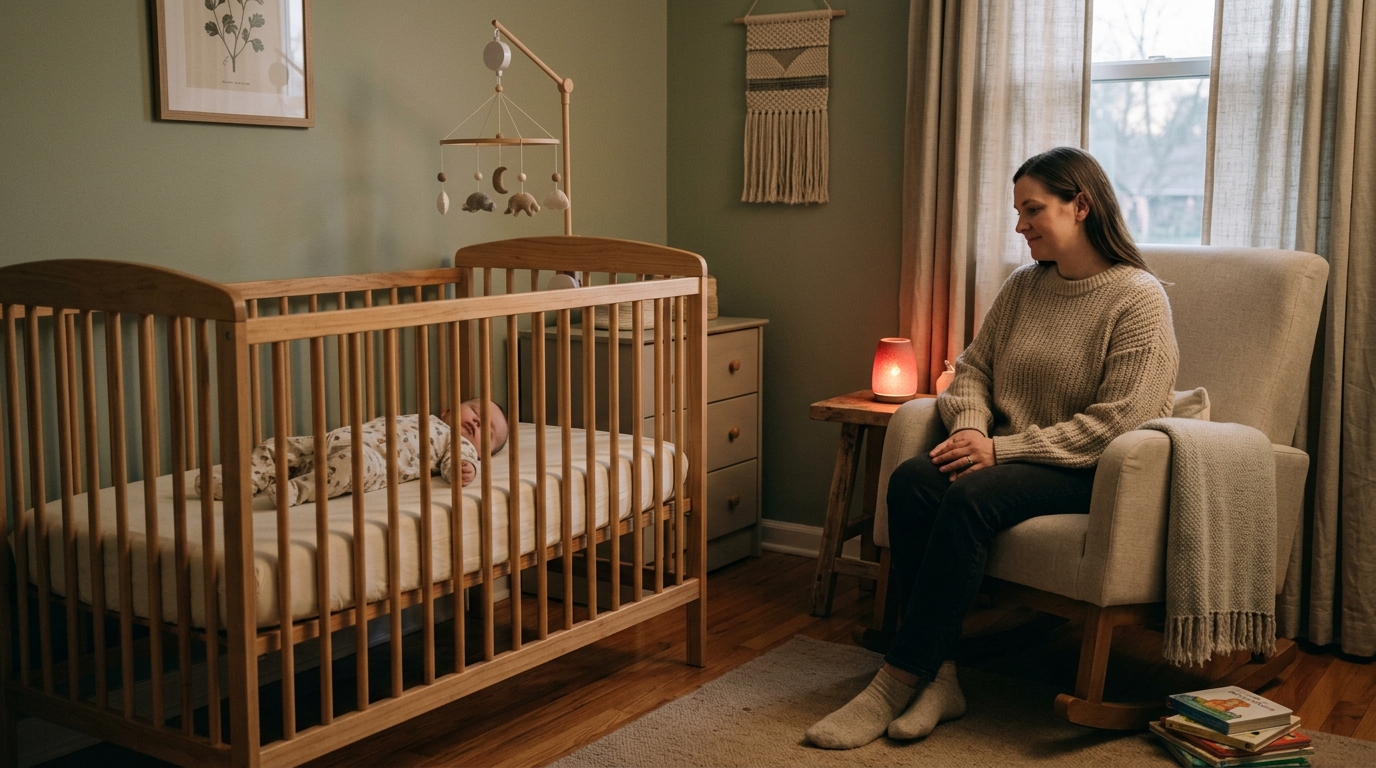
Toddler Waking Up Screaming: Causes, Comfort, and Gentle Solutions
A toddler waking up screaming is frequently caused by night terrors, occurring in the first third of the night, or nightmares during REM sleep. Other triggers include overtiredness, illness, or separation anxiety. While night terrors affect approximately 3-6% of children, most outgrow them by age seven through consistent, responsive care.
Few things are as heart-wrenching for a parent as the sound of their toddler waking up screaming in the middle of the night. You rush into their room, heart racing, only to find them seemingly inconsolable. As a UK-based responsive sleep consultant at Nourished Nights, I speak to many exhausted parents who are navigating these intense night-time awakenings. Understanding the 'why' behind these screams is the first step toward bringing peace back to your household, without ever needing to resort to leaving your child to cry.
Why is my toddler waking up screaming?
When a toddler screams upon waking, it is rarely a sign of 'naughtiness' or a 'bad habit.' Instead, it is a physiological or emotional response to their environment, their development, or their sleep architecture. Toddlers are undergoing massive neurological changes; their brains are processing new language, complex emotions, and physical milestones all at once. This cognitive load often spills over into their sleep.
The most common reasons for these vocal awakenings include night terrors, nightmares, overtiredness, and separation anxiety. Because toddlers lack the emotional regulation to handle big feelings alone, they rely on us to be their external regulators. At Nourished Nights, we believe in providing gentle sleep support that honours this biological need for proximity and comfort.
Is it a night terror or a nightmare?
Distinguishing between a night terror and a nightmare is crucial because the way you respond to each should be different. Night terrors (pavor nocturnus) occur during deep, non-REM sleep, usually within the first few hours of the night. During a night terror, your child may look awake, their eyes might even be open, but they are actually stuck between sleep states and are not aware of your presence.
In contrast, nightmares occur during REM (Rapid Eye Movement) sleep, typically in the second half of the night. When a toddler wakes from a nightmare, they are truly awake, often remember parts of the dream, and can be comforted by your cuddles and words. The following table highlights the key differences to help you identify what is happening in your home.
| Feature | Night Terrors | Nightmares |
|---|---|---|
| Timing | First 2-3 hours of sleep | Late night or early morning |
| State of Consciousness | Partial arousal; child is asleep | Fully awake and alert |
| Memory of Event | No memory the next morning | Often remembered and vivid |
| Response to Comfort | May push you away or scream louder | Calmed by physical touch and voice |
| Action Required | Ensure safety; do not wake them | Responsive comfort and reassurance |
How can I help my toddler through a night terror?
If you have identified that your toddler is experiencing a night terror, your primary role is to keep them safe. Because they are in a state of 'confusional arousal,' trying to wake them up or shaking them can actually prolong the episode or cause them to become more distressed. Instead, stay close, ensure they don't fall out of their cot or hit their head on the bars, and wait for the episode to pass.
Night terrors can last anywhere from a few minutes to half an hour. Once the episode ends, the child usually settles back into deep sleep almost instantly. While it is frightening for you to witness, remember that your child is not in pain and will have no memory of it. If these episodes are frequent, it is worth looking at their overall sleep hygiene and schedule, as overtiredness is a major trigger for night terrors.
The role of overtiredness in night-time distress
In the world of toddler sleep, 'sleep breeds sleep' is more than just a catchphrase. When a toddler misses their ideal sleep window, their body produces cortisol and adrenaline to keep them going. This 'second wind' makes it much harder for them to settle and increases the likelihood of fragmented sleep and intense awakenings.
If your toddler is waking up screaming, take a look at their daytime routine. Are they still napping? If they have recently dropped their nap, they might be reaching bedtime in a state of extreme exhaustion. Conversely, if their nap is too long or too late, it might be interfering with their sleep pressure for the night. Finding that 'sweet spot' is something we focus on during a Sleep Clarity Call, where we look at the unique rhythms of your family life to reduce the physiological stress on your child’s system.
Why attachment-focused support matters for toddlers
Many traditional sleep training methods suggest that if a toddler wakes up screaming, parents should limit interaction or use 'controlled crying.' At Nourished Nights, we fundamentally disagree with this approach. A child who is screaming is a child who is communicating a need, whether that is a need for physical comfort, help regulating a fear, or simply the reassurance that they are not alone.
Using no cry-it-out sleep support means we always respond to the child. We look at why the scream is happening and address the root cause. If your toddler is going through a peak of separation anxiety, which is very common around 18 months and again at 2.5 years, they need more connection, not less. By being a consistent, responsive presence, you are actually building the internal security they need to eventually feel safe sleeping independently. You might find our article Does Sleep Training Work? A Guide to Responsive and Gentle Methods helpful in understanding the science behind this approach.
Creating a safer sleep environment for your toddler
A calm environment can significantly reduce the frequency of night-time awakenings. In the UK, we follow the guidance provided by The Lullaby Trust to ensure every child has a safe space to rest. For a toddler, this means a clear cot or bed, a room temperature between 16-20°C, and breathable bedding.
| Environmental Factor | Ideal Setting for Toddlers |
|---|---|
| Temperature | 16-20°C (use a room thermometer) |
| Lighting | Total darkness or a dim, red-toned nightlight |
| Sound | White or pink noise to mask household sounds |
| Bedding | Cotton sheets and a well-fitted toddler duvet (if over 12 months) |
Avoid using blue-light screens (tablets or TVs) at least an hour before bed, as this inhibits the production of melatonin, the sleepy hormone. Instead, focus on a predictable, low-arousal wind-down routine that includes plenty of 'connection time', cuddles, stories, and gentle conversation about their day.
When to seek professional advice for toddler sleep
While most night-time screaming is a normal part of development, there are times when it is important to seek further help. If your child’s screaming is accompanied by gasping, snoring, or breathing through their mouth, it could indicate a physical issue like enlarged tonsils or adenoids (obstructive sleep apnoea). Similarly, if your child seems to be in physical pain, has a fever, or if the episodes are becoming increasingly frequent and violent, you should always consult your GP or health visitor.
As a Level 6 OCN accredited practitioner, I work alongside families to identify when sleep challenges are behavioural/developmental and when they might require a medical perspective. My role is to provide the 'Calm Nights Reset' for families who are at breaking point, offering a structured but entirely responsive plan to move from chaos to clarity.
Practical steps for a calmer night
If you are currently in the thick of it, here are some practical, gentle steps you can take today:
- Check the schedule: Ensure your toddler isn't staying awake too long between their nap and bedtime.
- Fill the connection tank: Spend 10-15 minutes of 1:1, uninterrupted time with your toddler before the bedtime routine starts.
- Validate feelings: If they wake from a nightmare, say, "I can see you're scared. I'm here, and you're safe."
- Use a transition object: If they are over 12 months, a small soft toy or 'lovey' can provide comfort when you aren't in the room.
- Review the 'why': Keep a simple log for a few nights. Is the screaming happening at the same time? This can help distinguish between terrors and nightmares.
Please note: This article provides general information and does not constitute medical advice. If you have concerns about your child’s health, breathing, or development, please consult your GP or health visitor.
FAQ
Question? Why does my toddler scream when they wake up from a nap? Answer: This is often 'sleep inertia,' where the child is transitionally confused between sleep states. It can also happen if the nap was cut short and they are still tired, requiring a few minutes of close physical comfort to fully wake up.
Question? Can diet affect toddler night-time screaming? Answer: Yes, large meals or sugary snacks close to bedtime can cause digestive discomfort or energy spikes that disrupt sleep. Ensure a balanced dinner and a calm, low-sugar evening snack if needed.
Question? Should I wake my toddler up if they are having a night terror? Answer: No, it is best not to wake them as it can cause further confusion and distress. Simply stay nearby to ensure they remain safe until the episode passes naturally.
Question? How long do night terrors usually last? Answer: Most night terrors last between 5 and 20 minutes, though they can feel much longer to a worried parent. Once finished, the child usually falls back into a deep sleep immediately.
Question? Is it normal for a 2-year-old to start waking up screaming suddenly? Answer: Yes, this is a common age for the '2-year-old sleep regression,' which is driven by a peak in imagination (leading to fears) and a drive for independence (leading to separation anxiety).
If you are feeling overwhelmed by your toddler's night-time awakenings and need a supportive, evidence-based plan tailored to your family, I am here to help. You don't have to choose between your sleep and your child's emotional needs. Download my free sleep guide today for immediate tips, or book a free 20-minute discovery call to discuss how we can work together to bring peace back to your nights.