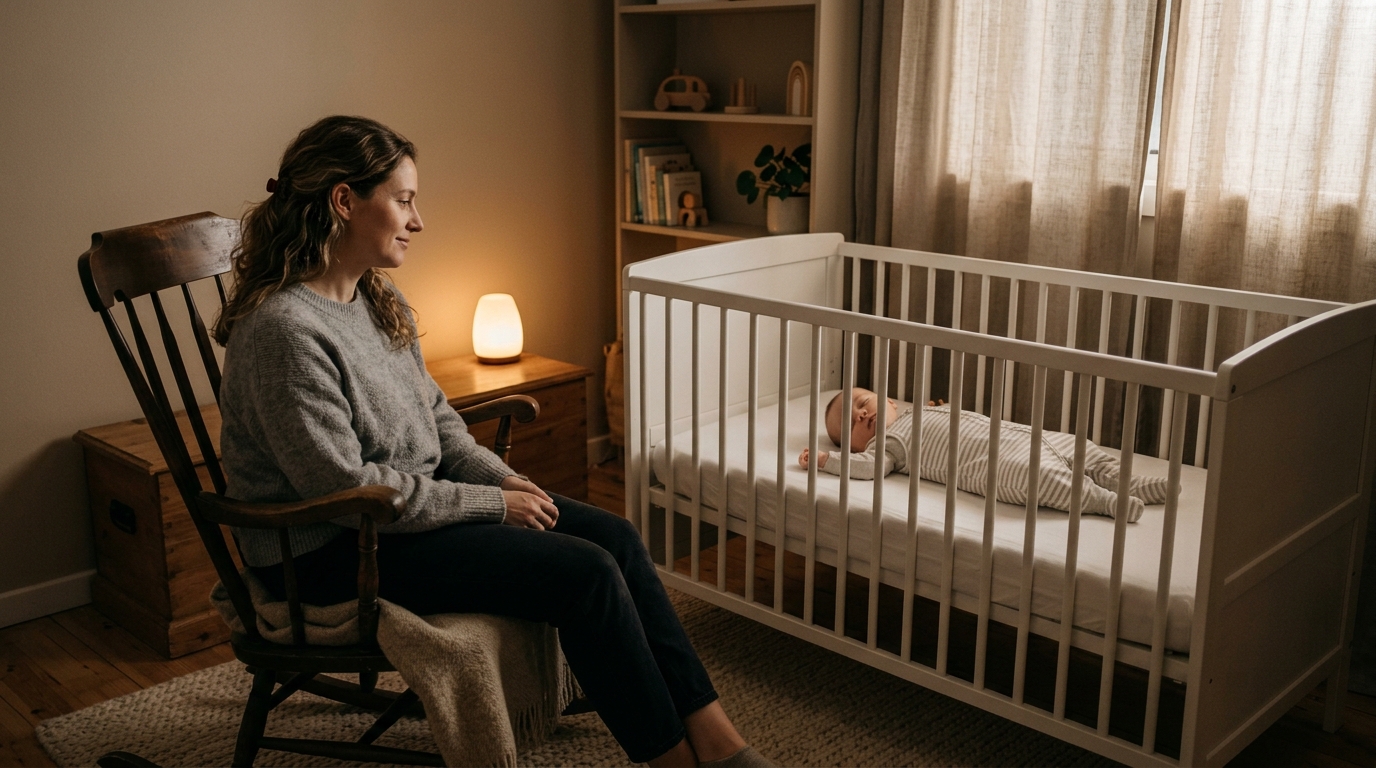
A Comprehensive Guide to Gradual Retreat Sleep Training: A Gentle Path to Better Sleep
Gradual retreat sleep training is a responsive, attachment-led method where a parent slowly reduces their physical presence in the baby's room over approximately 10 to 14 nights. By moving through distinct stages, from sitting by the cot to standing at the door, parents provide consistent reassurance while allowing the child space to develop self-settling skills without using extinction methods.
Please note: The content provided in this article is for general information purposes only and does not constitute medical advice. Always speak to your GP or health visitor if you have concerns about your child’s health, growth, or development. All sleep advice provided here aligns with UK safer sleep guidance from The Lullaby Trust and the NHS.
What is gradual retreat sleep training?
Gradual retreat, often referred to as the 'Camping Out' method or the 'Chair Method,' is a technique designed for families who want to support their child towards more independent sleep without leaving them to cry alone. Unlike traditional 'cry-it-out' or extinction methods, which many families prefer to avoid due to the stress it can cause both parent and child, gradual retreat is rooted in responsiveness. It allows you to be physically present and emotionally available as your child learns the skill of falling asleep in their own sleep space.
At its core, the method involves a series of small, manageable steps. You begin by sitting right next to the cot, offering physical touch and verbal reassurance. Over several nights, you gradually increase the distance between yourself and the cot until you are eventually outside the room. This slow transition helps to lower the child's anxiety and builds their confidence, knowing that their caregiver is still there to support them if they become distressed.
For many parents seeking gentle sleep support, this method strikes the perfect balance. It acknowledges that sleep is a developmental milestone that cannot be forced, but it provides a structured framework to help move away from sleep associations that may no longer be sustainable, such as rocking to sleep for hours or needing a parent to lie in the bed with them all night.
Is the gradual retreat method right for your family?
Deciding which approach to take with your child's sleep is a deeply personal choice. Gradual retreat is particularly well-suited to parents who feel uncomfortable with the idea of leaving their baby to cry. It is a popular choice for those working with a no cry-it-out sleep support specialist because it prioritises the parent-child bond.
However, it is important to be realistic about the process. Because it is a gentle method, it typically takes longer than more traditional, less responsive techniques. While extinction methods might see changes in 3 days, gradual retreat often requires 10 to 14 days of consistency. It also requires a significant amount of parental patience, as you will be spending quite a bit of time sitting in a chair in a dark room during the initial phases.
This method is generally most effective for babies over six months of age who have a solid grasp of object permanence and for toddlers who may be experiencing separation anxiety. If you are currently struggling with transfers, you might find our guide on why your baby cries when put down to sleep helpful to read alongside this strategy.
A Step-by-Step Plan for the Gradual Retreat Method
Consistency is the key to success with any sleep support plan. Before you begin, ensure your child's sleep environment is optimal: the room should be dark, the temperature between 16-20°C, and the child should be in a safe cot with a firm, flat mattress in accordance with The Lullaby Trust guidelines.
| Phase | Position of Parent | Level of Interaction | Typical Duration |
|---|---|---|---|
| Phase 1 | Sitting right next to the cot. | Occasional physical touch (patting, stroking), soft shushing. | Nights 1-3 |
| Phase 2 | Sitting a few feet away from the cot. | Verbal reassurance only; touch only if child becomes very distressed. | Nights 4-6 |
| Phase 3 | Sitting halfway between the cot and the door. | Minimal verbal reassurance; intermittent shushing. | Nights 7-9 |
| Phase 4 | Sitting by the door (inside the room). | Very occasional verbal reassurance. | Nights 10-12 |
| Phase 5 | Sitting just outside the open door. | Waiting for the child to settle; responding only if needed. | Nights 13-14 |
During Phase 1, your goal is to be a 'responsive anchor.' If your baby reaches out for you, you can offer a hand or a gentle stroke. As you move into Phase 2 and beyond, the goal is to reduce the 'sensory input' the baby receives from you. You are still there, providing a 'secure base,' but you are encouraging them to find their own comfortable position and settle into sleep.
How long does gradual retreat take to work?
One of the most frequent questions parents ask at Nourished Nights is how quickly they will see results. With gradual retreat, you should start to see a shift in your child's confidence within the first week. However, the full transition to independent settling usually takes around two weeks.
It is common to see a 'burst' of protest around Night 4 or 5 when you first move the chair away from the cot. This is often because the child has realised the 'rules' of bedtime are changing. If you stay consistent and calm, this protest usually subsides quickly. If you find yourself feeling overwhelmed by the process, seeking the help of a baby sleep consultant in London or your local area can provide the emotional scaffolding you need to stay the course.
Why is consistency so important in this process?
In the world of child development, consistency equals safety. When a child knows exactly what to expect at bedtime, their cortisol (stress hormone) levels remain low, allowing melatonin (the sleep hormone) to do its job. If you sit by the cot one night, but then pick the baby up and rock them to sleep the next because you are tired, the child becomes confused. This intermittent reinforcement can actually lead to more crying, as the child isn't sure which response they will get.
At Nourished Nights, we often recommend a 'Sleep Clarity Call' to help parents map out their consistency plan before they start. This ensures both parents (if applicable) are on the same page and that the timing is right, avoiding periods of illness, teething, or major routine disruptions like starting nursery.
How does gradual retreat compare to other gentle methods?
There are several effective and compassionate alternatives to crying it out. Gradual retreat is often compared to 'Pick Up, Put Down' (PUPD). While PUPD involves a lot of physical movement and can sometimes be overstimulating for older babies or toddlers, gradual retreat is a more 'boring' and calming presence.
| Feature | Gradual Retreat | Pick Up, Put Down |
|---|---|---|
| Physicality | Low (mostly sitting) | High (lots of lifting) |
| Best Age | 6 months to 4 years | 4 months to 8 months |
| Parental Stamina | Requires patience to sit still | Requires physical strength |
| Stimulation Level | Low/Calming | Can be high for some babies |
For many, the gradual retreat method feels more sustainable because it doesn't require the constant physical exertion of PUPD, making it a preferred choice for parents who are already physically exhausted.
Common challenges and how to overcome them
Even with the best plan, challenges will arise. The most common hurdle is the 'protest' when the parent moves the chair. It is vital to remember that crying is a form of communication, not necessarily a sign of trauma, especially when you are right there in the room with them. Your presence is the reassurance.
Another challenge is the 'toddler factor.' If your child is in a toddler bed rather than a cot, they may simply get out of bed and come to sit on your lap. In these instances, the 'silent return' method is used alongside gradual retreat. You gently and calmly lead them back to bed with minimal interaction, then return to your designated chair position. This reinforces the boundary while maintaining the gentle, responsive connection.
When should you start gradual retreat sleep training?
Timing is everything. It is generally best to wait until your baby is at least six months old. At this age, their circadian rhythm is well-established, and they are often developmentally ready to handle the slight frustration of learning a new skill. It is also important to ensure that their daytime routine is age-appropriate. If a baby is over-tired or under-tired, any sleep method will be significantly more difficult to implement.
If you are unsure if your baby is ready, look for signs such as: consistently waking the moment they are put down, needing more and more intensive intervention to fall asleep (e.g., rocking for an hour), or frequent night wakes where they aren't hungry but simply need help transitioning between sleep cycles.
Creating the right environment for success
Before you even move a chair into the room, your 'sleep hygiene' must be on point. This includes a consistent, calming bedtime routine. A typical UK routine might include a bath, putting on a clean nappy and pyjamas, a feed (ensuring the baby doesn't fall asleep on the breast or bottle), a story, and then into the cot with their dummy if they use one.
By keeping the routine identical every night, you signal to the brain that sleep is coming. This reduces the 'fight or flight' response and makes the gradual retreat process much smoother. Remember, the goal is not to 'train' the baby, but to support them in a way that feels safe and predictable.
FAQ
What if my baby becomes extremely distressed? If your baby moves from 'protest' to genuine 'distress,' you should always respond. This might mean moving back a step for one night or offering a cuddle until they are calm before trying again. The method is responsive, not rigid.
Can I do this for naps as well as bedtime? Yes, but it is often easier to start at bedtime when 'sleep pressure' is at its highest. Once bedtime is established and the child understands the process, you can apply the same logic to daytime naps.
Do I have to sit in the room the whole time? In the early phases, yes. You stay until they are fully asleep. As you progress to the door and then outside the room, you are effectively 'retreating,' but you should remain nearby and responsive to any calls for help.
What happens if they have a night wake? You apply the same phase you are currently on for bedtime to any night wakes. If you are on Phase 2 (sitting a few feet away) at bedtime, you do the same if they wake at 2 am, after ensuring all their basic needs (hunger, nappy, temperature) are met.
Can I use a dummy with this method? Absolutely. If your child finds comfort in a dummy, there is no need to remove it unless it is causing frequent 'dummy runs' where you have to go in and replace it multiple times a night. In that case, you might teach them to find and replace it themselves.
If you are feeling overwhelmed by your child's sleep and need a tailored approach that respects your parenting style, Nourished Nights is here to help. Whether you need a quick Sleep Clarity Call to tweak your current approach or a comprehensive Restful Family Transformation package, we provide the gentle sleep support you need to get your family’s rest back on track. Download our free sleep guide today or book a free 20-minute discovery call to take the first step towards calmer nights.